
Compass March 2026 National Real Estate Insights
A Complete Look at the Early Spring Housing Market
As we head into the spring real estate season, the latest national data offers a comprehensive look at current housing trends. February is typically a transitional month, with markets gradually emerging from the winter slowdown, and 2026 is no exception.
A Stable Start to the Year
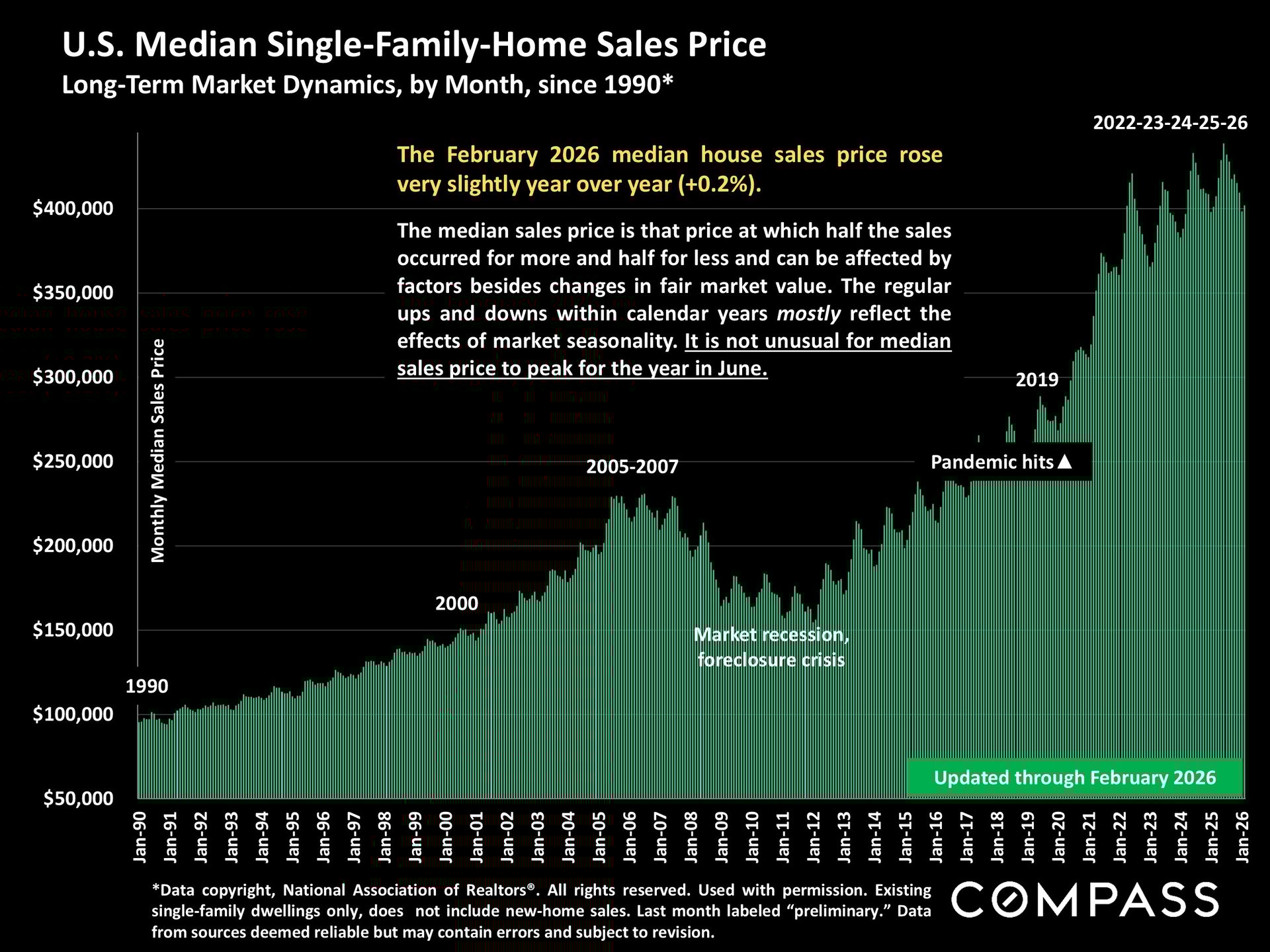
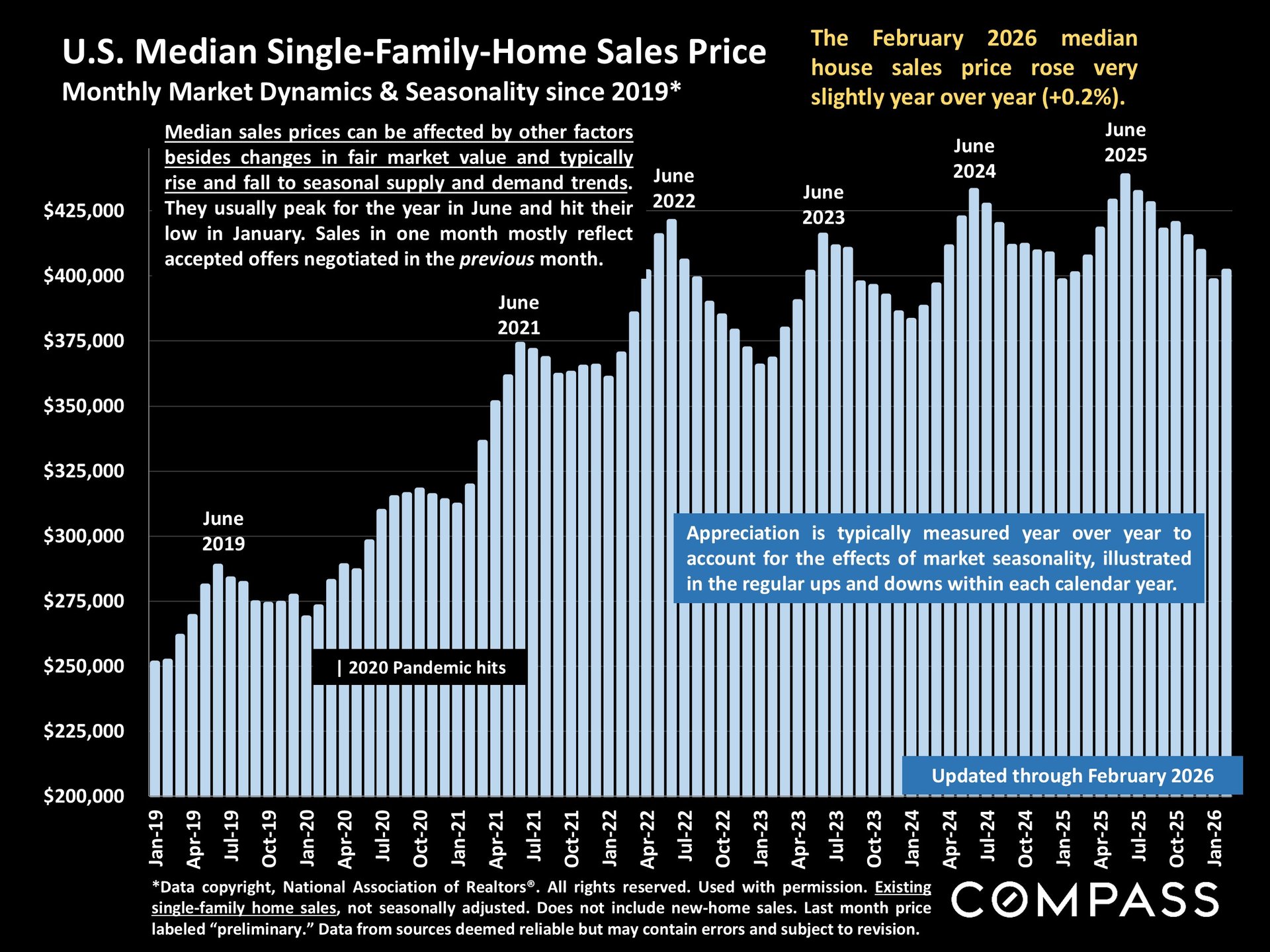
In February 2026, the median home sales price remained essentially flat year over year, rising just 0.2%, while the number of home sales was also unchanged. This signals a market that is stable, but still in the early stages of seasonal acceleration.
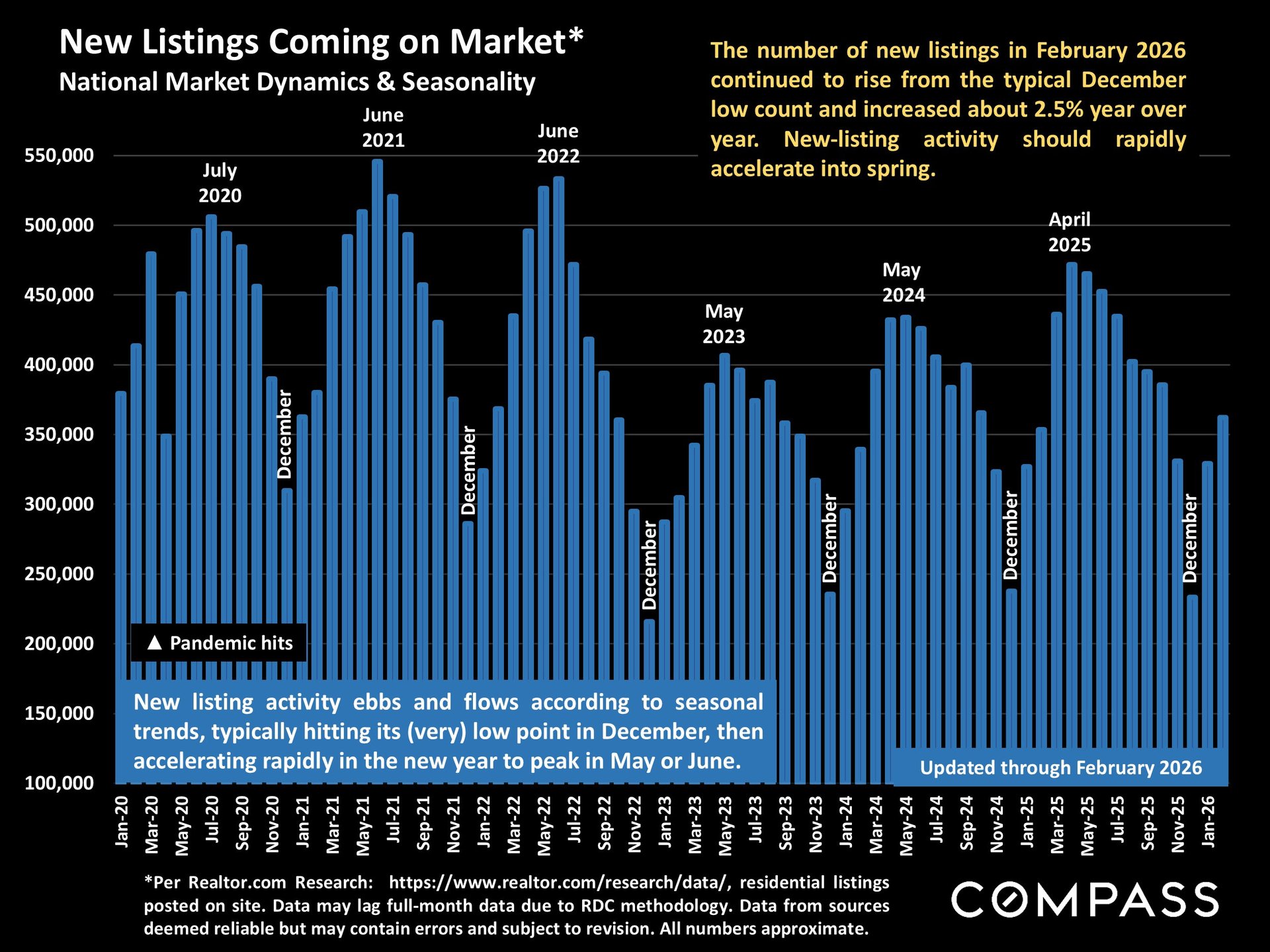
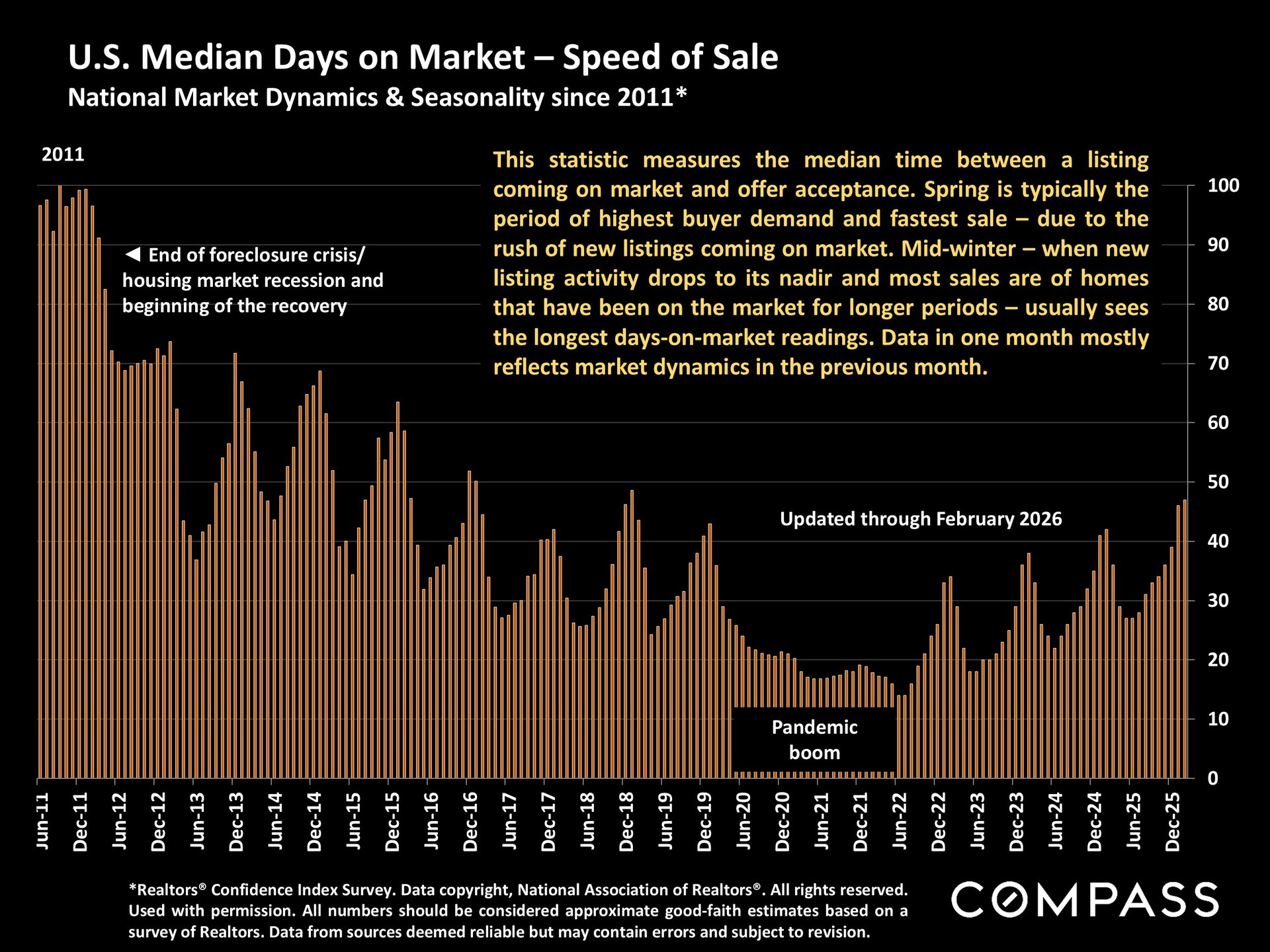
Inventory showed modest growth, with the number of homes for sale increasing 2.4% from January and 4.9% year over year. At the same time, homes took slightly longer to sell, with median days on market increasing to 47 days, up from 42 days last year.
Photos Courtesy of Compass
Competition Is Moderating, But Still Present
While demand remains strong, the intensity of competition has eased compared to recent years:
-
14% of homes sold above list price (down from 21%)
-
20% of buyers waived inspections (down from 24%)
-
8% of contracts experienced appraisal delays (up from 7%)
-
6% of deals were terminated before closing (up from 5%)
-
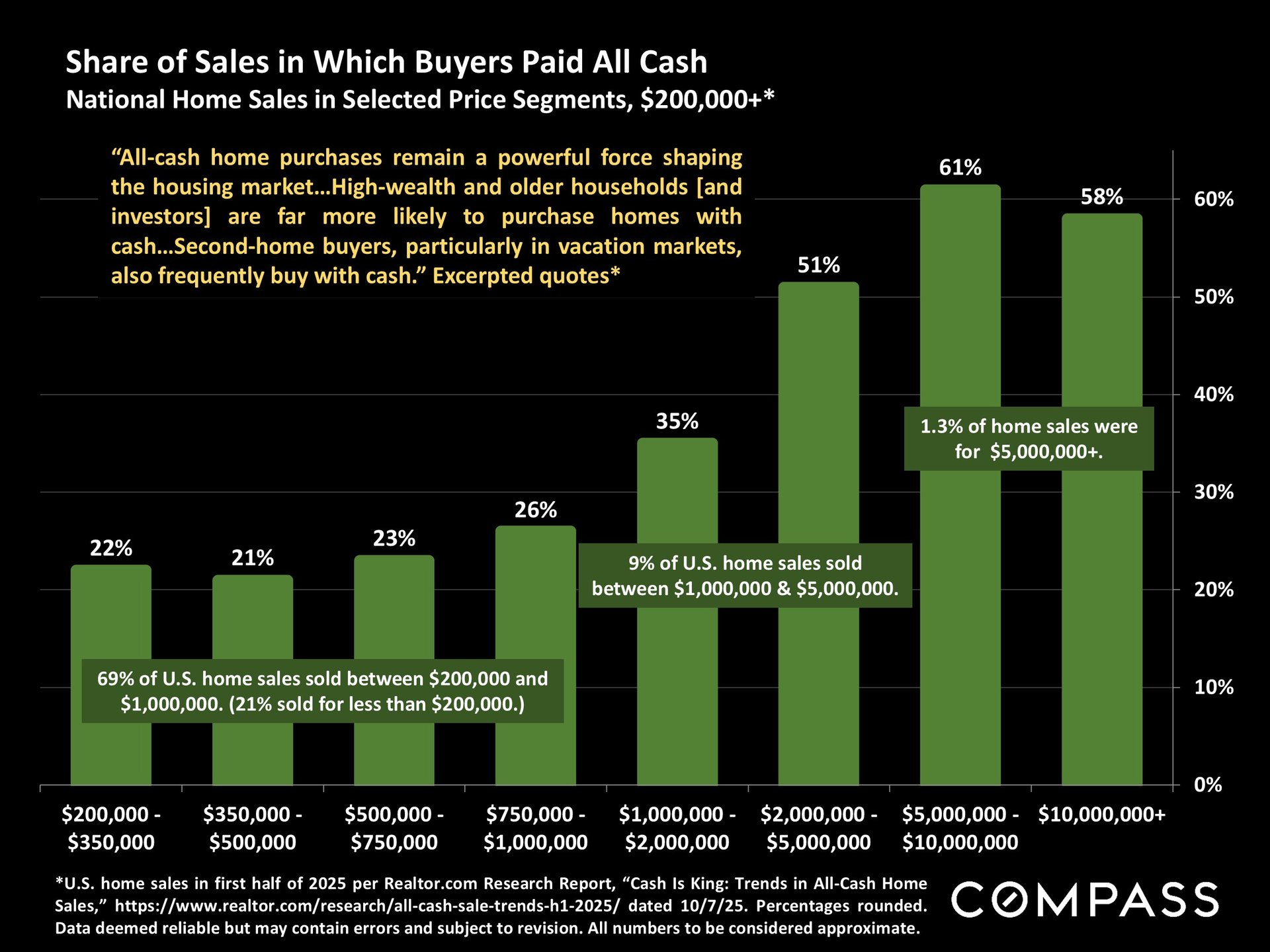
31% of sales were all-cash transactions
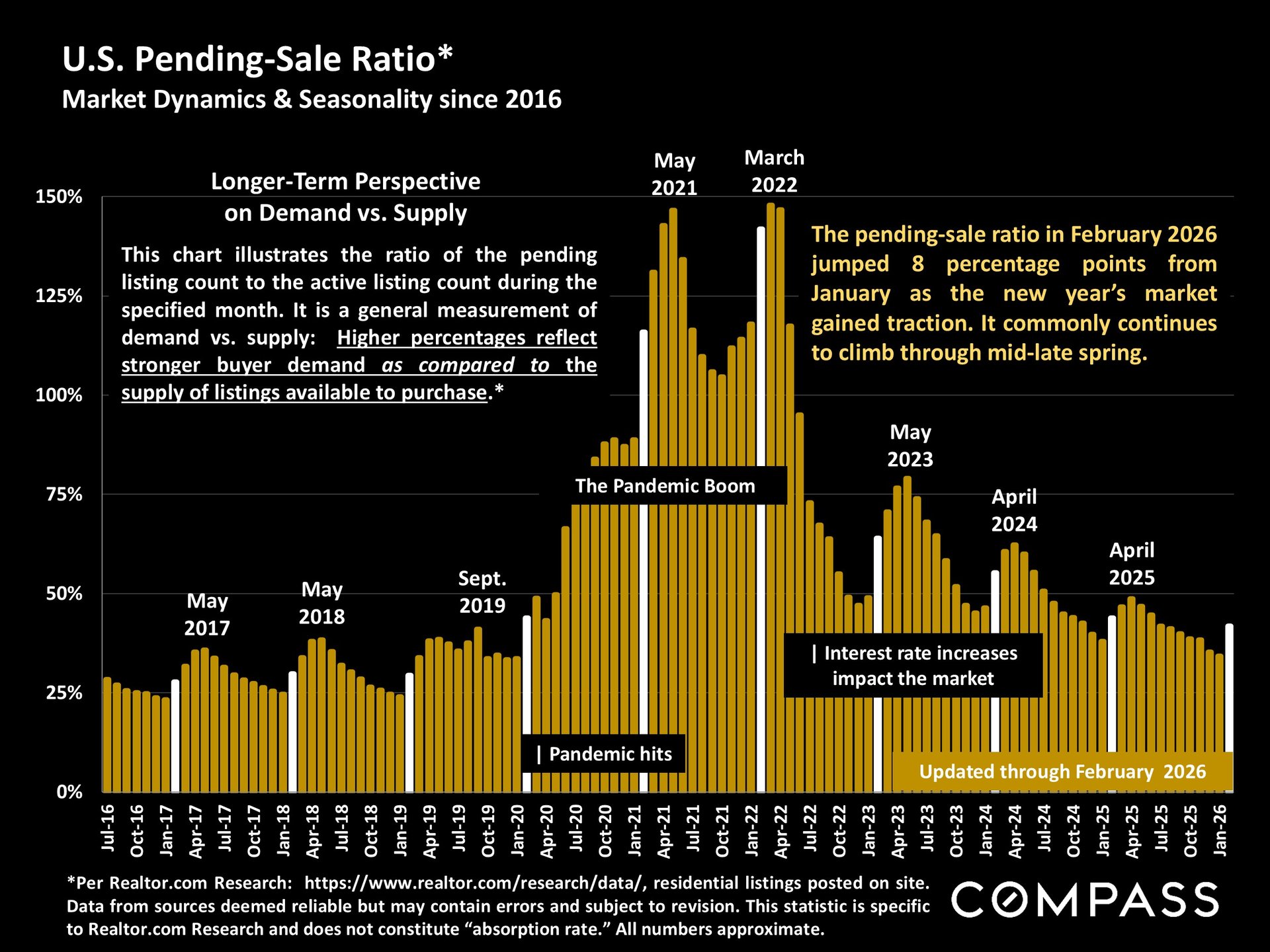
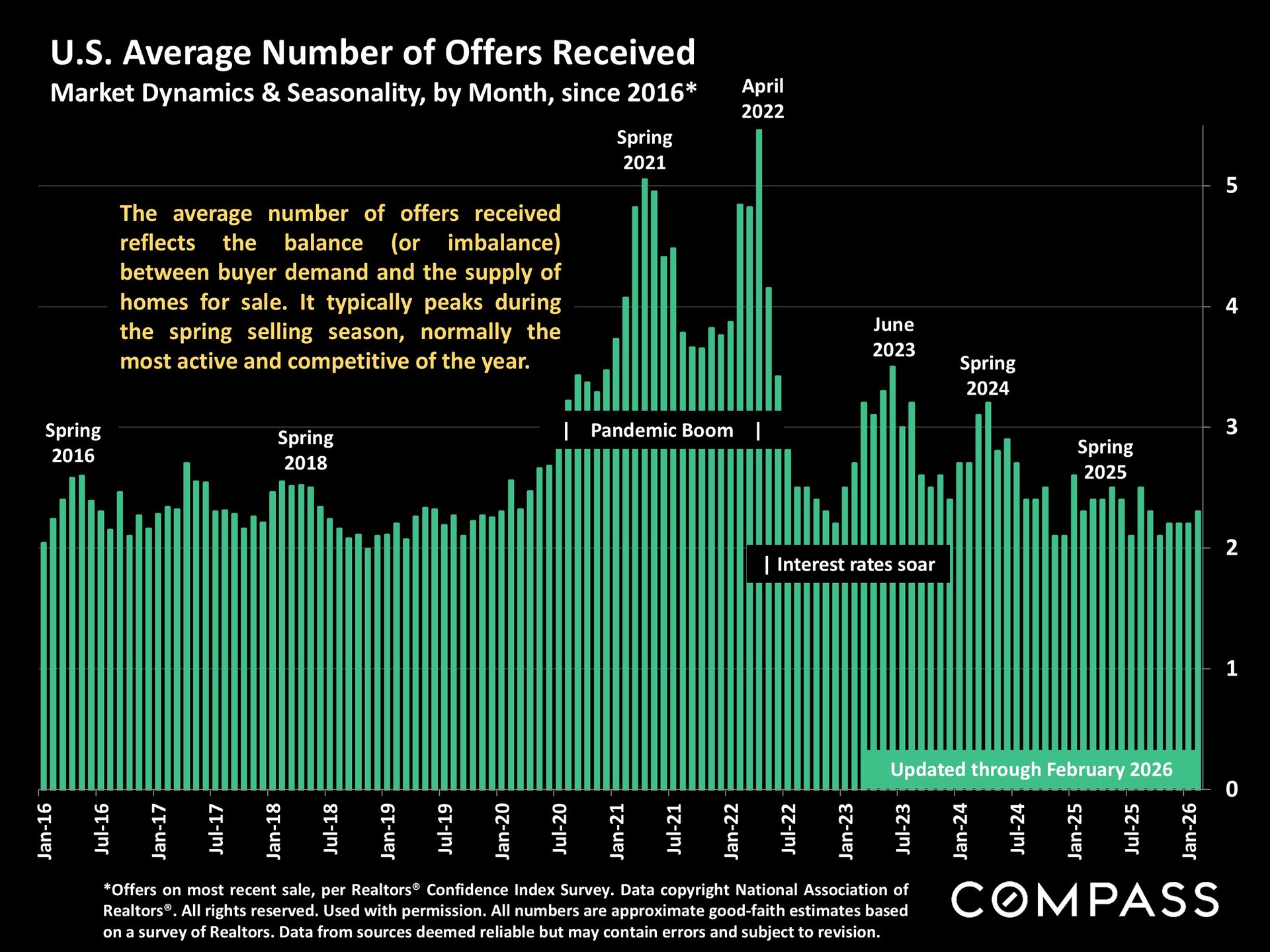
More offers still signal stronger competition and remain the primary driver of rising home prices. Historically, spring brings the highest number of competing offers, while mid-winter tends to be the least competitive period.
Photos Courtesy of Compass
Mortgage Rates Holding Steady
According to Freddie Mac (the Federal Home Loan Mortgage Corporation), the average 30-year conforming mortgage rate was 6% as of March 5, 2026, essentially unchanged week over week.
By March 10, the daily average rate rose slightly to 6.09%, a modest 10 basis point increase since the onset of the Iran war. Despite global uncertainty, mortgage rates remain near multi-year lows, continuing to support affordability.
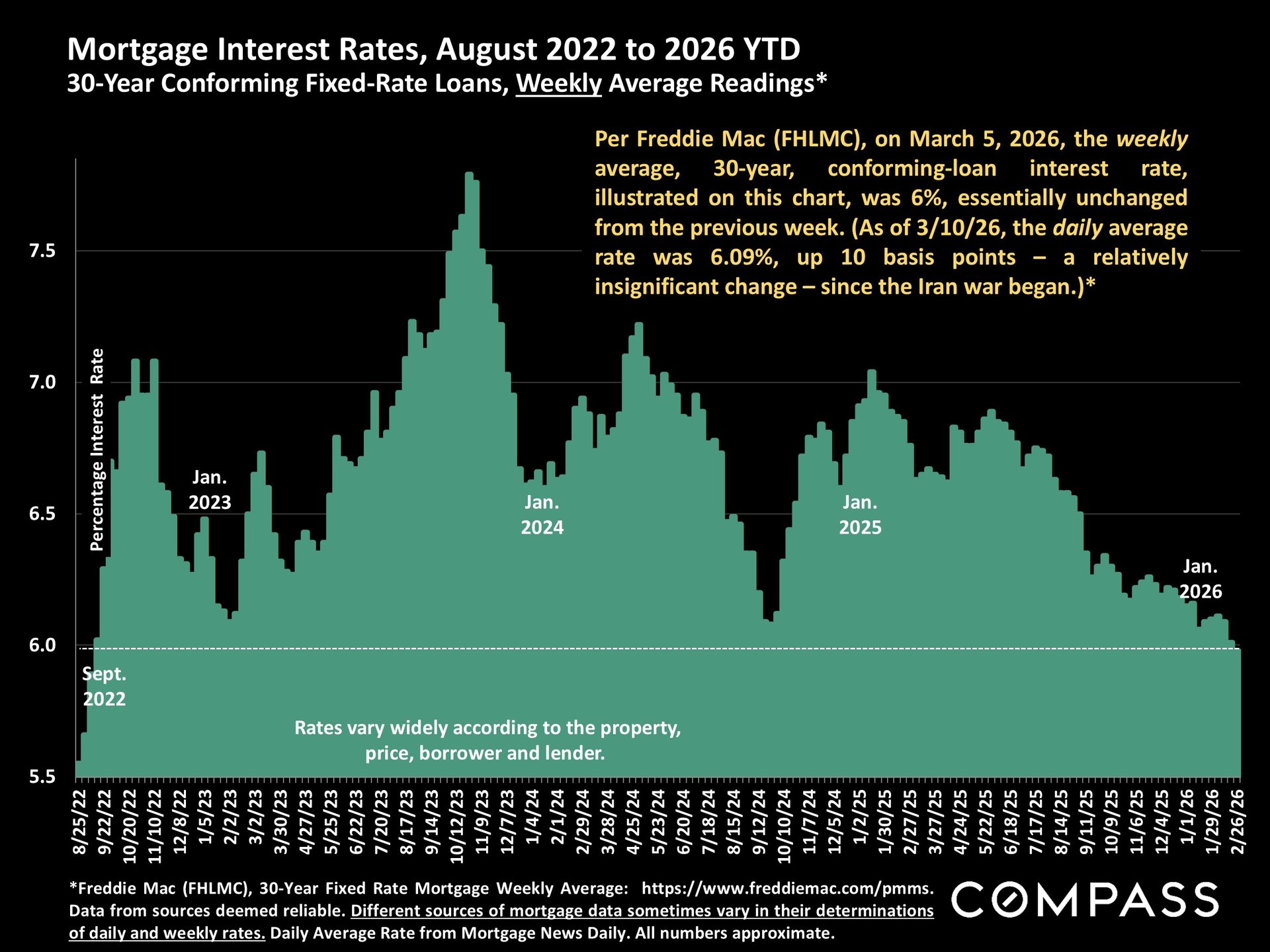
Photo Courtesy of Compass
Economic Uncertainty & Oil Volatility
One of the biggest wildcards in today’s market is global economic uncertainty. Oil prices, in particular, have been highly volatile, with significant implications for inflation and consumer confidence.
On March 9, 2026, oil reached an intra-day high of $119.50 per barrel before falling later that day and fluctuating again on March 10. These dramatic swings can influence everything from transportation costs to financial markets—factors that ultimately impact housing demand.
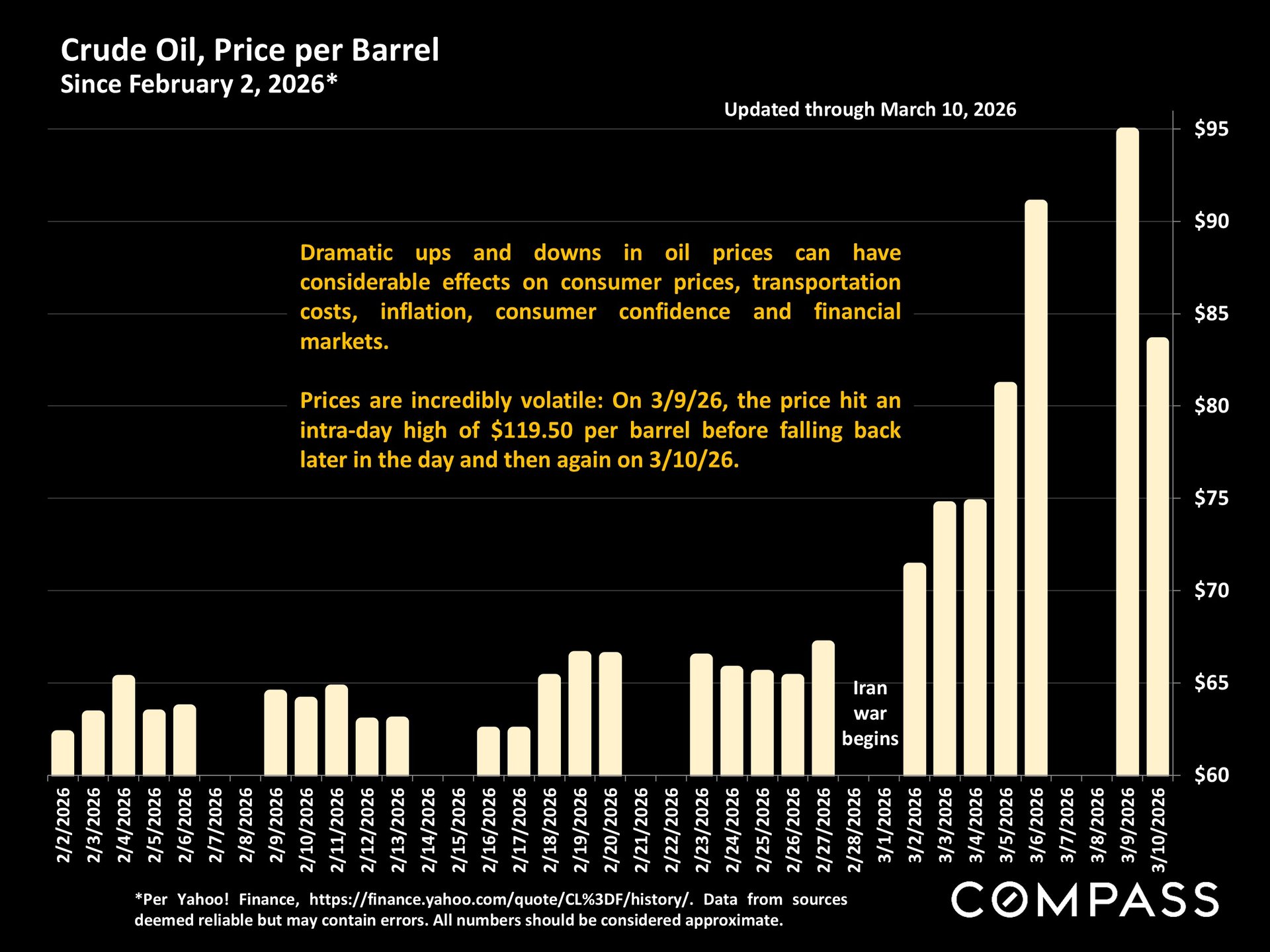
Photo Courtesy of Compass
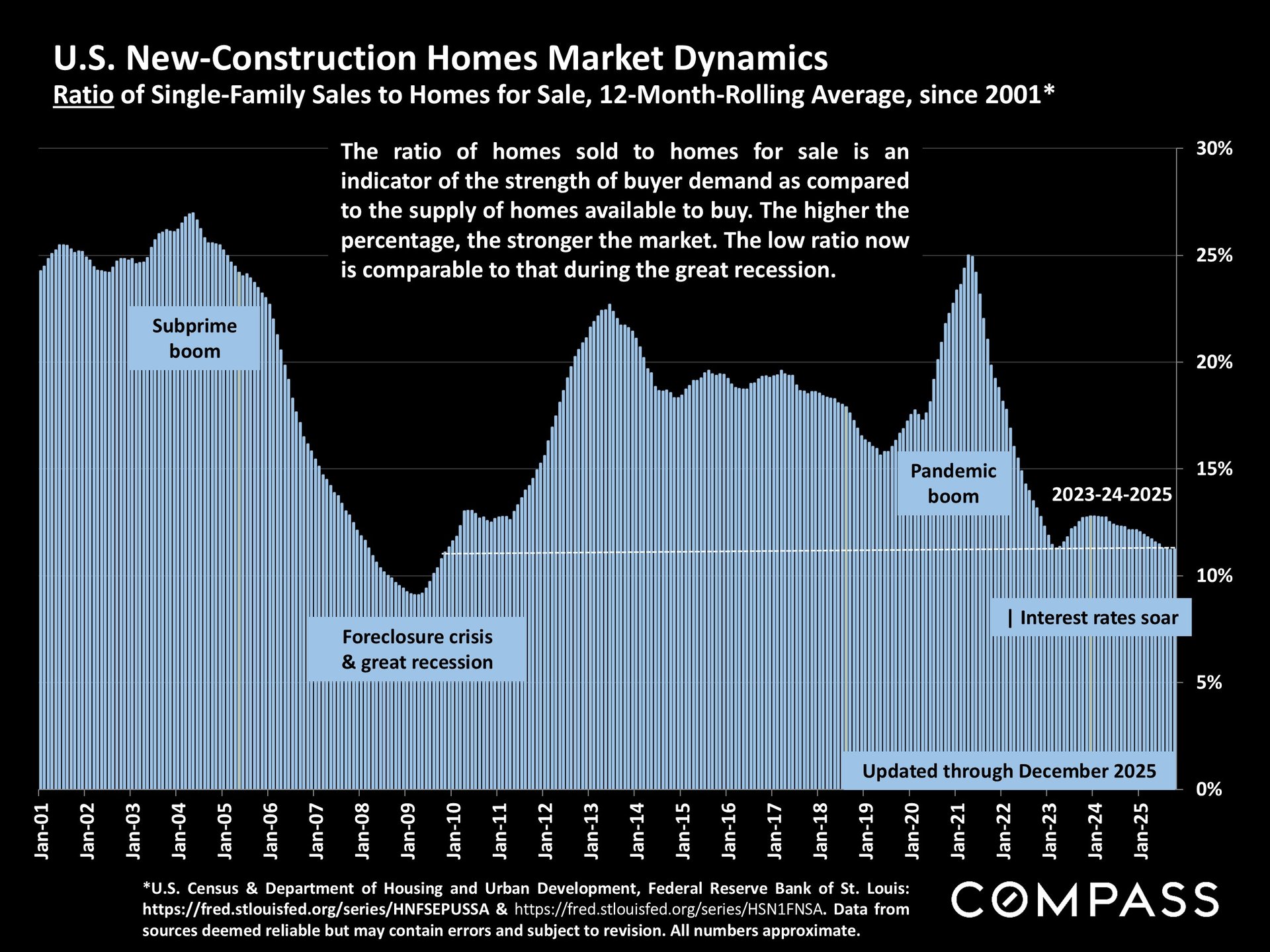
The Core Driver: Supply and Demand
At its foundation, the housing market is governed by the balance between supply and demand.
-
When buyer demand exceeds supply, homes sell quickly, bidding wars increase, and prices rise.
-
When supply exceeds demand, homes sit longer, price reductions become more common, and buyers gain negotiating power.
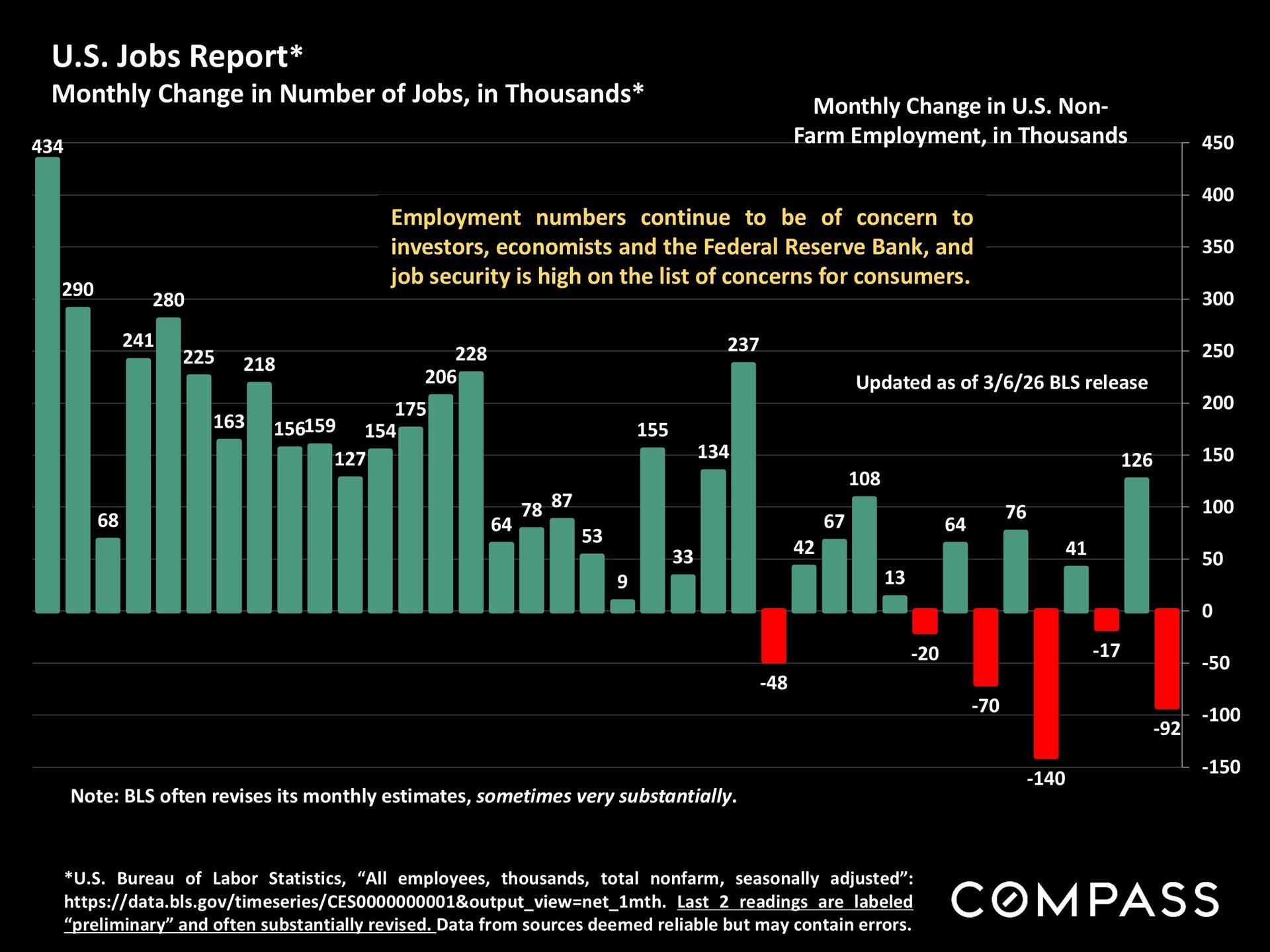
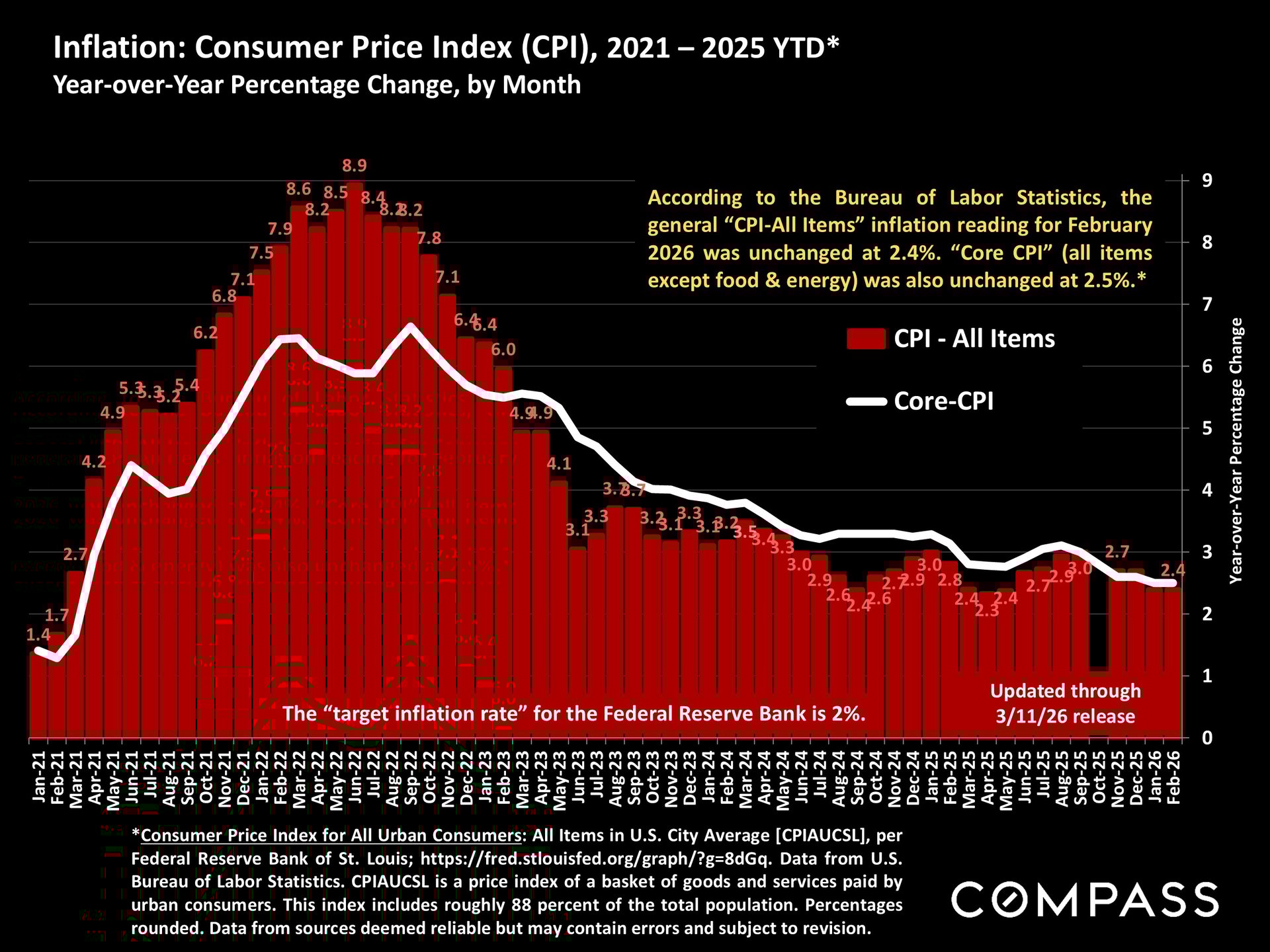
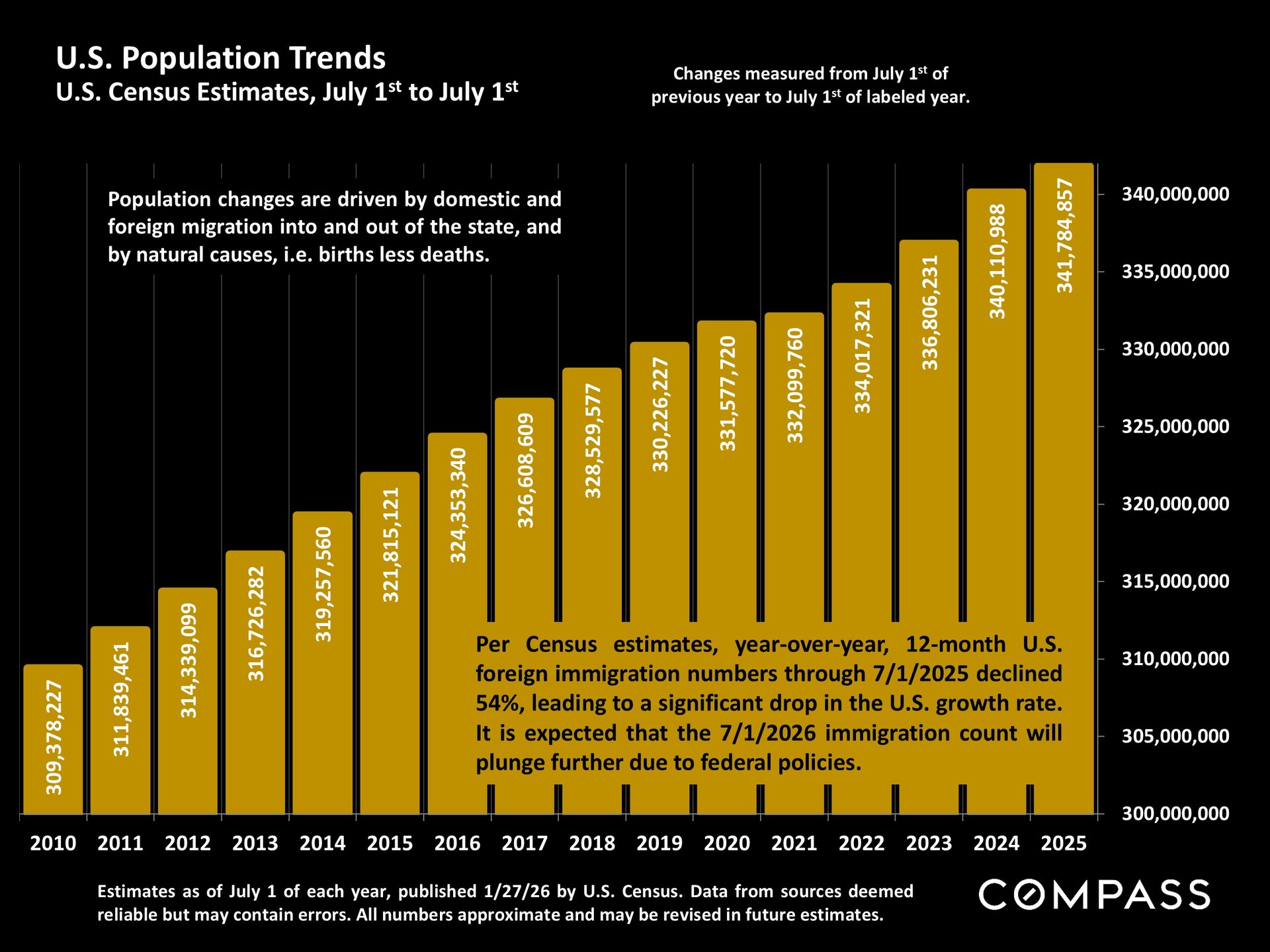
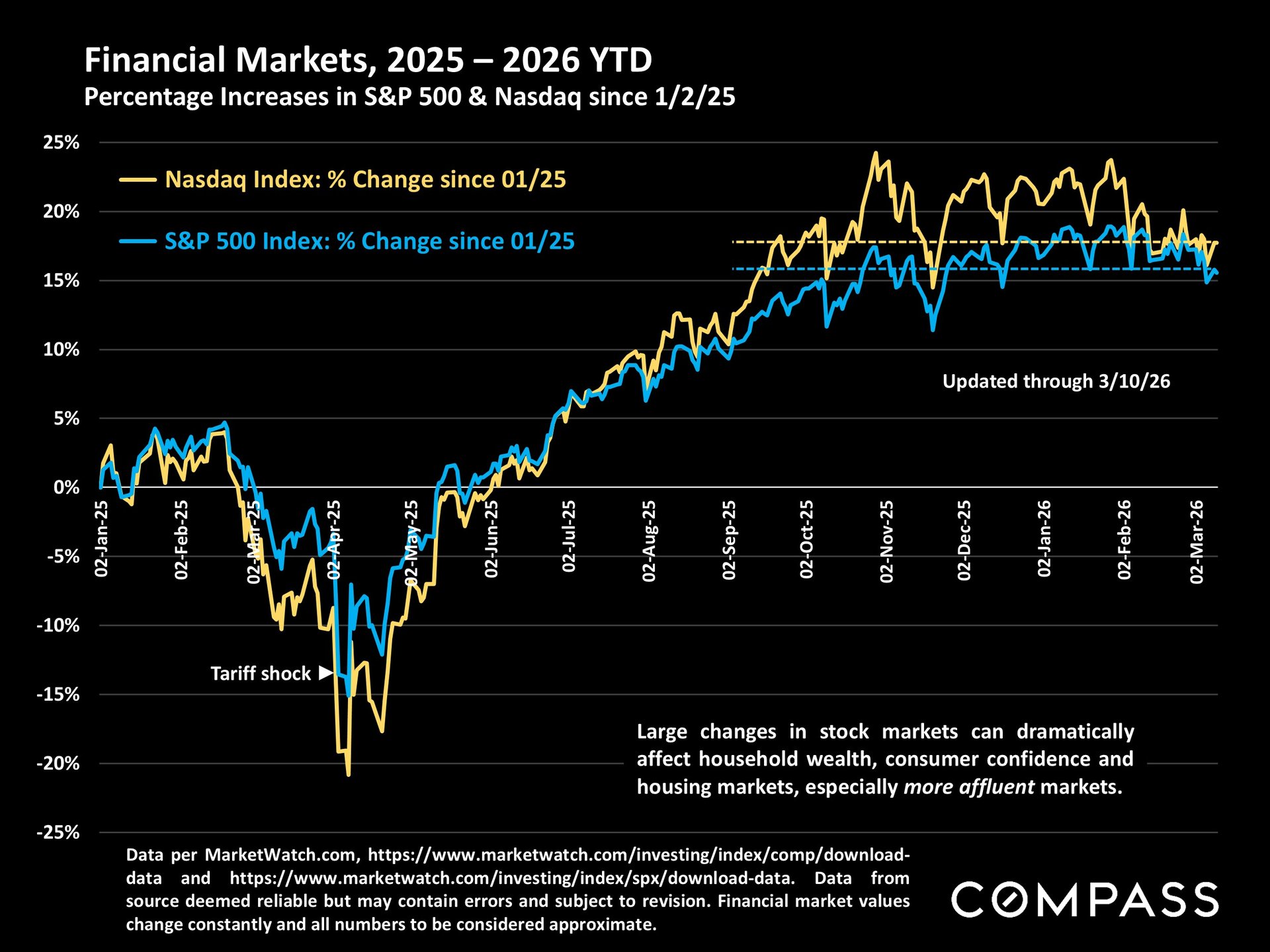
This balance is constantly shifting due to a wide range of factors, including interest rates, employment, inflation, migration trends, investor activity, new construction, and broader financial conditions—such as movements in the S&P 500 and Nasdaq Composite.
External forces like economic shocks, geopolitical conflict, or policy changes can rapidly accelerate or slow the market.
Photos Courtesy of Compass
Seasonality: The Rhythm of Real Estate
Real estate follows a predictable seasonal pattern each year.
A common dynamic early in the year is that buyers return to the market faster than sellers list their homes. This creates a supply-demand imbalance that often fuels a competitive spring market, making it the most active and heated time of year. During this period:
-
Homes sell faster
-
Multiple offers are more common
-
Median home prices often reach their annual peak
As summer begins, demand typically softens due to vacations and school schedules, while inventory reaches its highest levels. Some markets, especially those with second-home appeal. see increased activity during peak travel seasons.
In many regions, there is also a brief uptick in fall activity, followed by a sharp slowdown during the winter holidays.
Importantly, while seasonality shapes trends, homes are bought and sold year-round. Well-prepared and properly priced homes can succeed in any market, while overpriced listings may struggle, even during peak seasons.
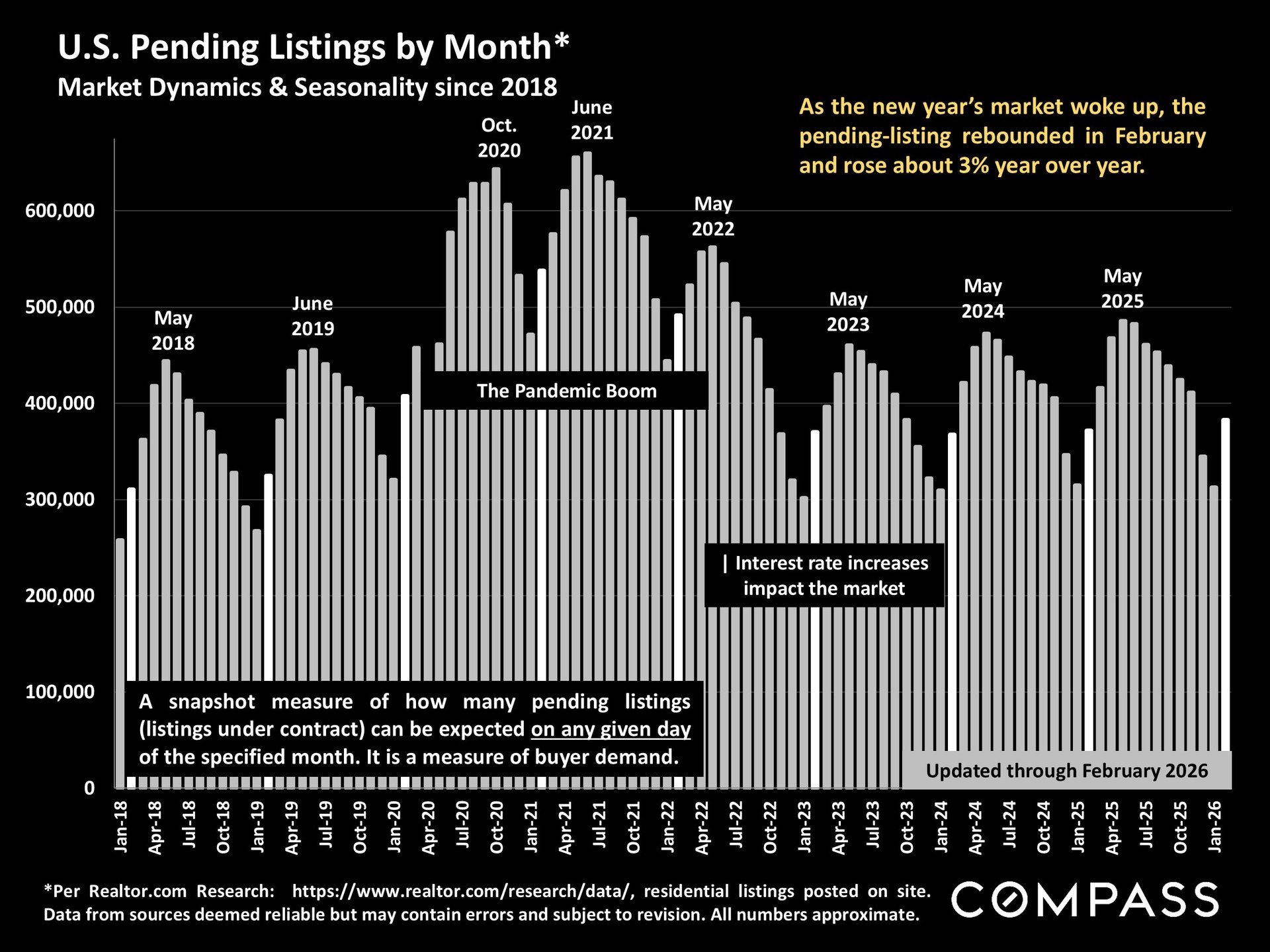
Photo Courtesy of Compass
Affordability Is Improving But Recovery Continues
While affordability is gradually improving, overall housing activity remains below pre-pandemic norms.
As Lawrence Yun of the National Association of Realtors explains:
“Housing affordability is improving, and consumers are responding. Still, there is a long way to go to return to pre-pandemic levels of transaction activity. There are more than 6 million more jobs than in 2019, yet home sales per year are down by one million. Despite the modest gain in home sales, actual housing demand remains muted relative to wage growth and job gains. Inventory is growing, but sluggishly.”
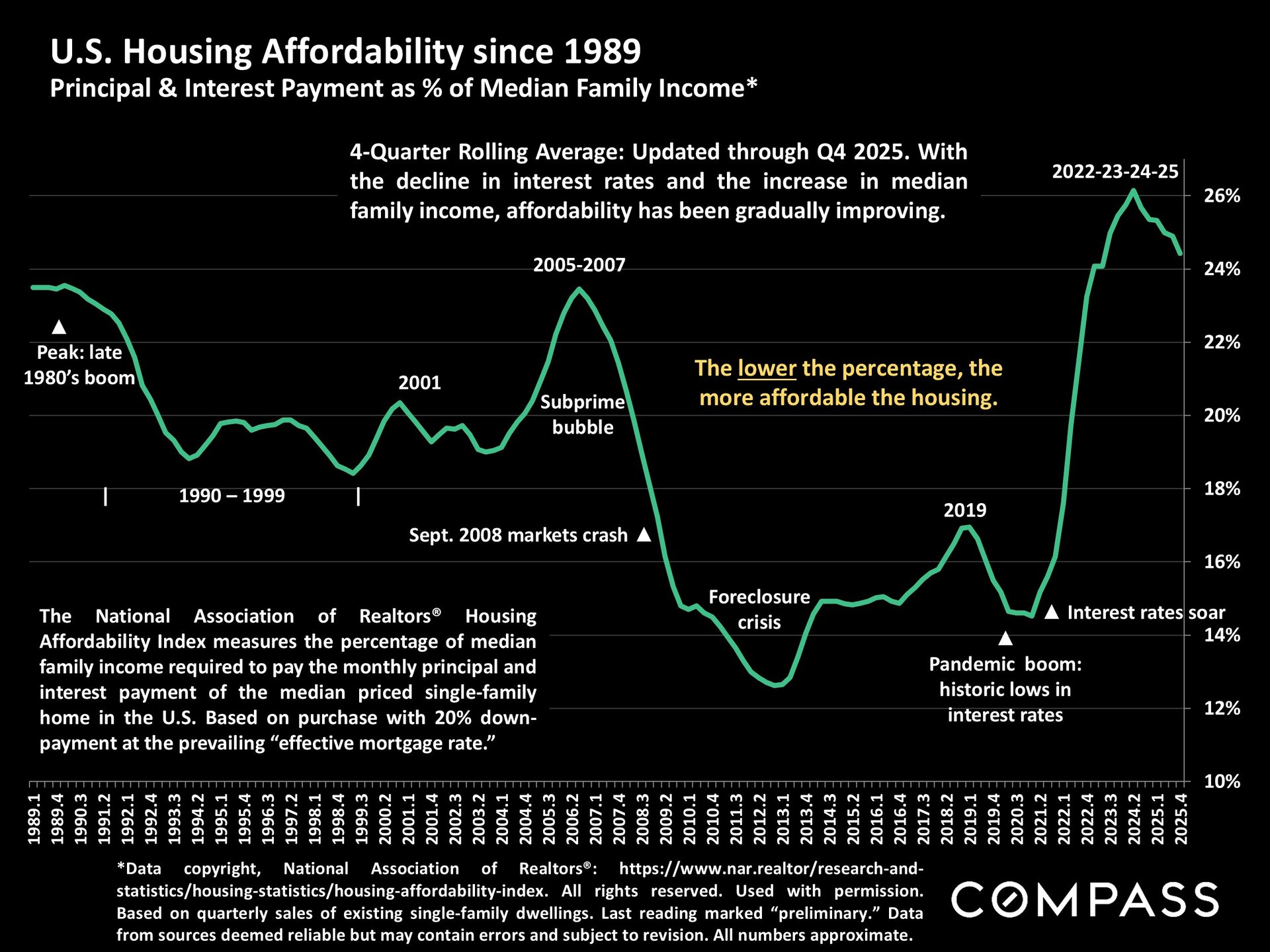
Photo Courtesy of Compass
What This Means for Buyers and Sellers
As we move deeper into 2026, the housing market is stable, gradually rebalancing, and highly influenced by both seasonal patterns and broader economic forces.
-
Buyers are seeing more options and slightly less competition, with opportunities to negotiate, especially on homes that have been on the market longer.
-
Sellers can still benefit from strong spring demand, particularly when homes are priced strategically and presented well.
Ultimately, success in today’s market comes down to understanding the interplay between timing, pricing, preparation, and evolving market conditions.

Photo Courtesy of Something Blue Photography
Your Local Advantage
While national trends provide valuable insight, real estate is ultimately local. The experts at The Blackshaw Messel Group are here to help you navigate these changing market conditions and understand how these national insights translate to our local markets. Whether you're thinking about buying, selling, or simply want to stay informed, having a knowledgeable local team on your side makes all the difference.