January 2026 National Real Estate Insights: What the Data Is Telling Us
As we enter 2026, the national real estate landscape is showing meaningful signs of transition. After several years defined by volatility, limited inventory, and affordability challenges, the latest data suggests a market that is slowly finding its footing. While challenges remain, there are several encouraging indicators for both buyers and sellers heading into the new year.
Long-Term Home Price Trends: Context Matters
When looking at U.S. median home sale prices since January 2020—just before the pandemic—it’s important to separate short-term fluctuations from long-term trends. Monthly ups and downs largely reflect normal seasonality rather than fundamental shifts in value. Zooming out further, annual appreciation data dating back to 1990 reinforces a consistent theme: despite cycles, residential real estate has remained a strong long-term asset across regions.
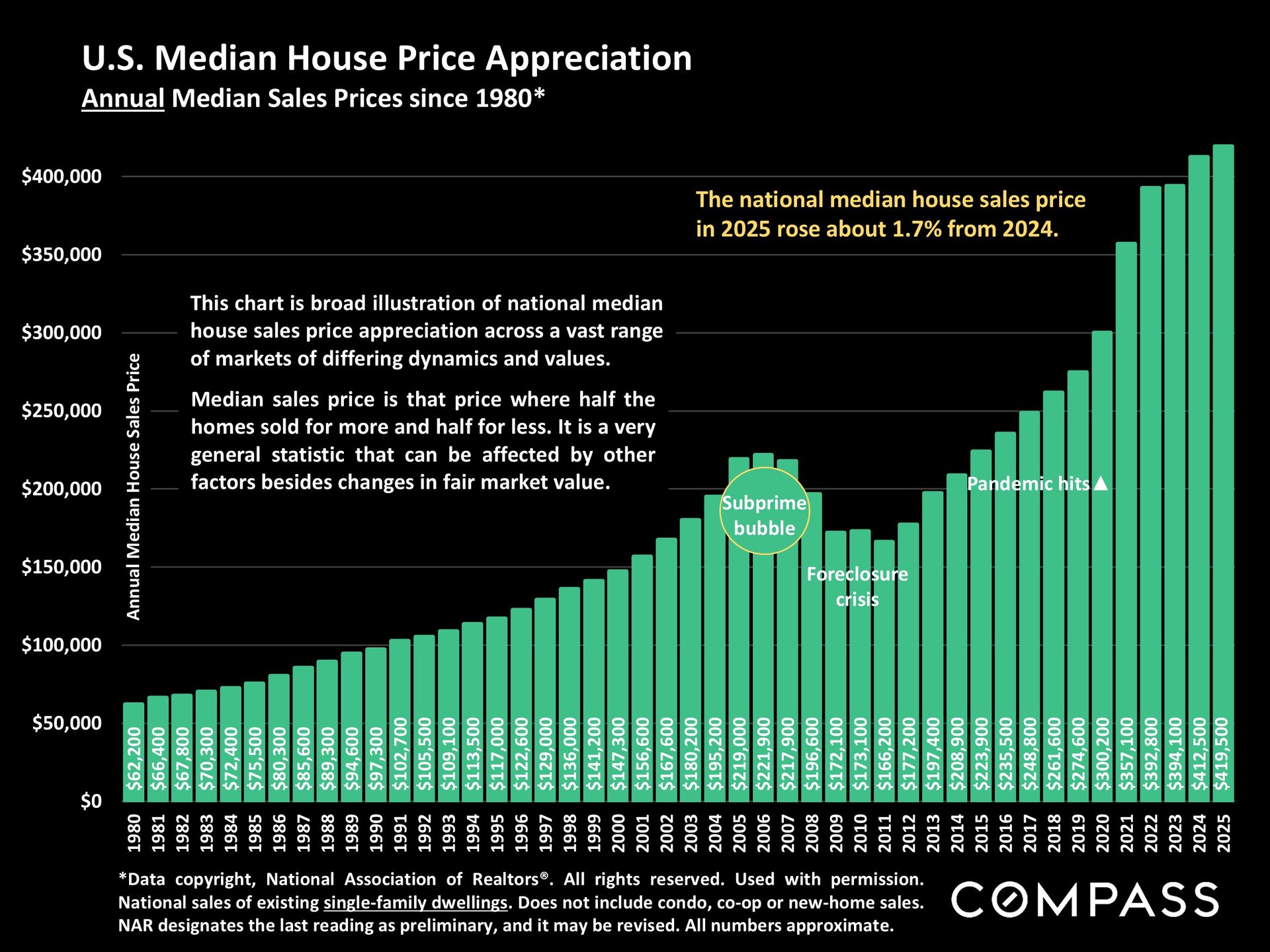
Photo Courtesy of Compass
Inventory Is Finally Improving
One of the most impactful developments of 2025 was the increase in housing supply:
-
New listings rose approximately 6% year over year
-
The average monthly number of homes for sale increased 14% compared to 2024
-
Buyers had more choices than at any point in the past five years
A key reason behind this improvement is the continued fading of the “mortgage lock-in effect.” Homeowners who secured ultra-low interest rates in prior years were hesitant to sell, but that reluctance has eased significantly—an important and healthy shift for the market.
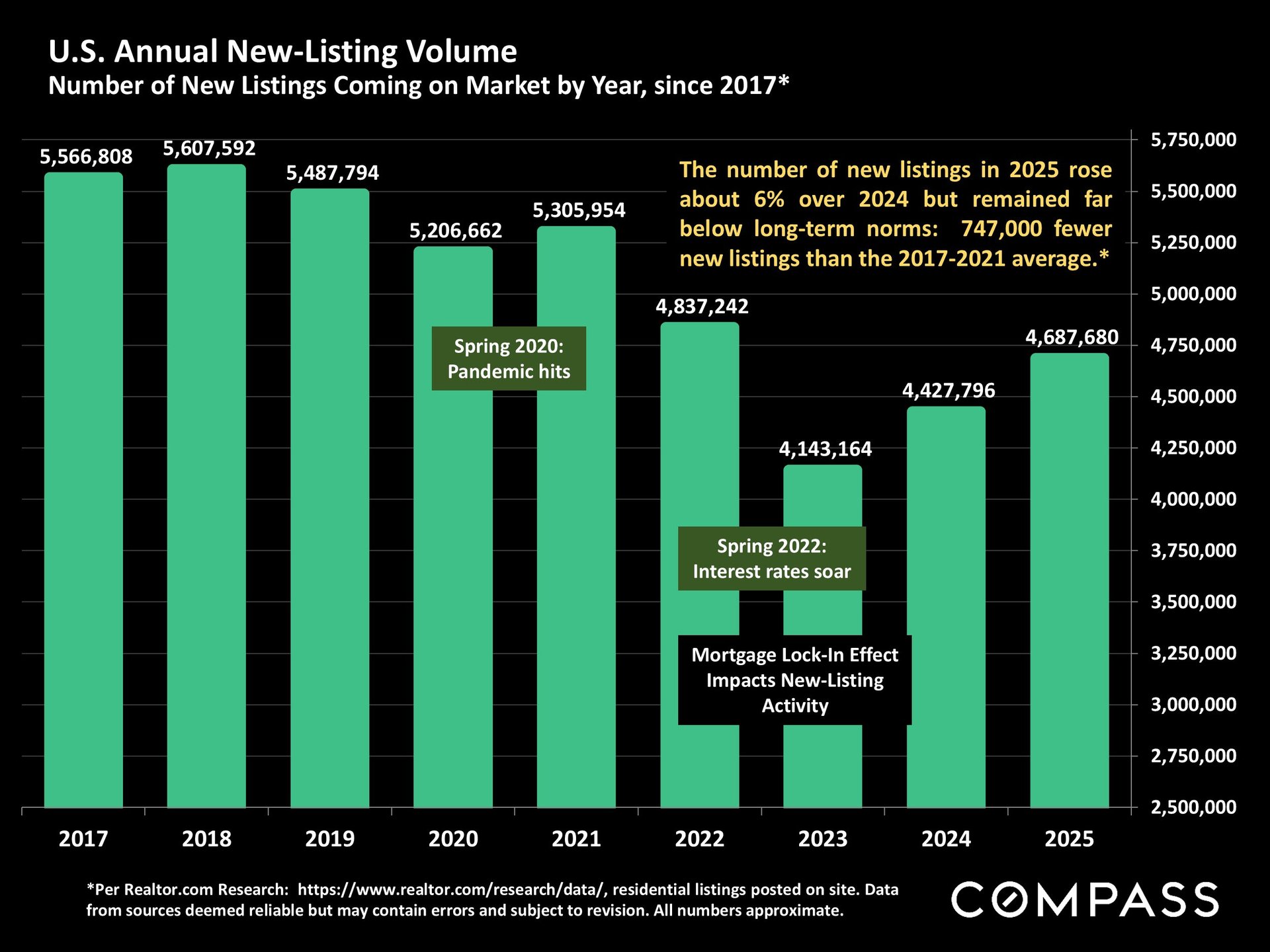
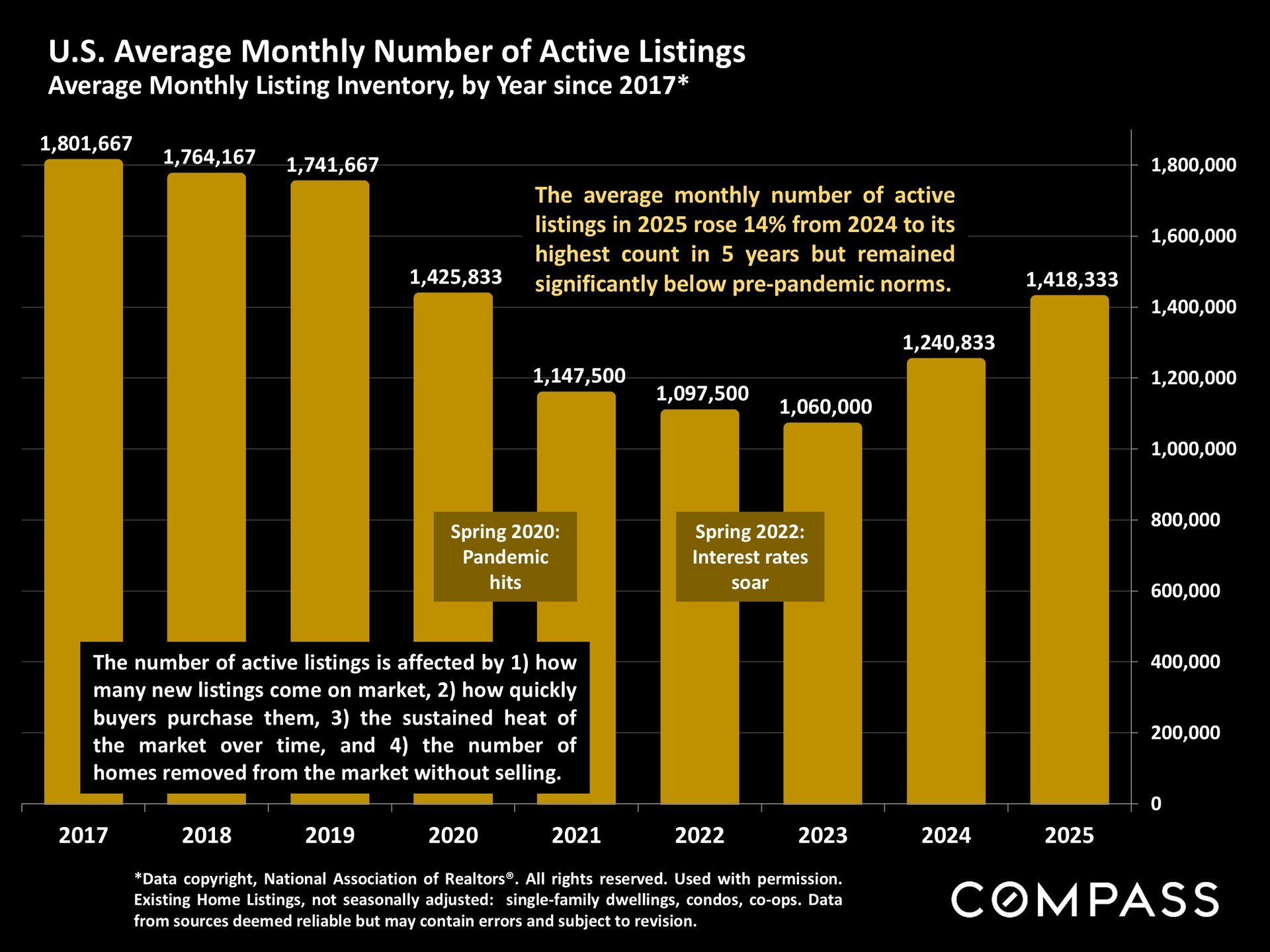
Photo Courtesy of Compass
More Choice = Slower, Smarter Buyers
While increased inventory is positive, it has changed buyer behavior. With more options available, buyers are taking their time, comparing homes more carefully, and negotiating more aggressively. As a result:
-
Homes took longer to sell on average in 2025
-
Buyer competition declined, reflected in fewer offers per listing
-
Markets felt cooler compared to the frenzy of prior years
In the South and Southwest, this effect was amplified by a surge in new-construction homes, which significantly boosted supply.
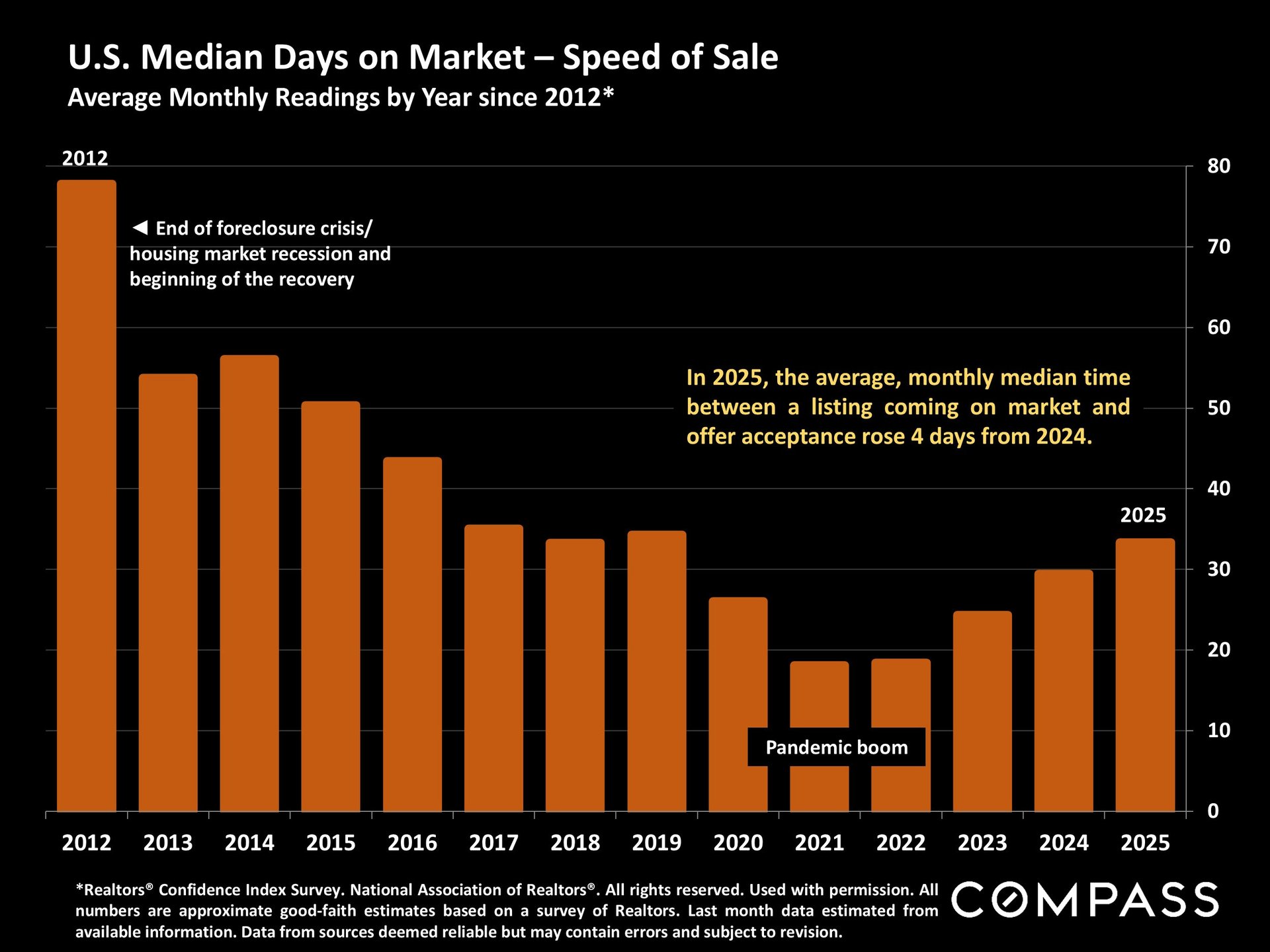
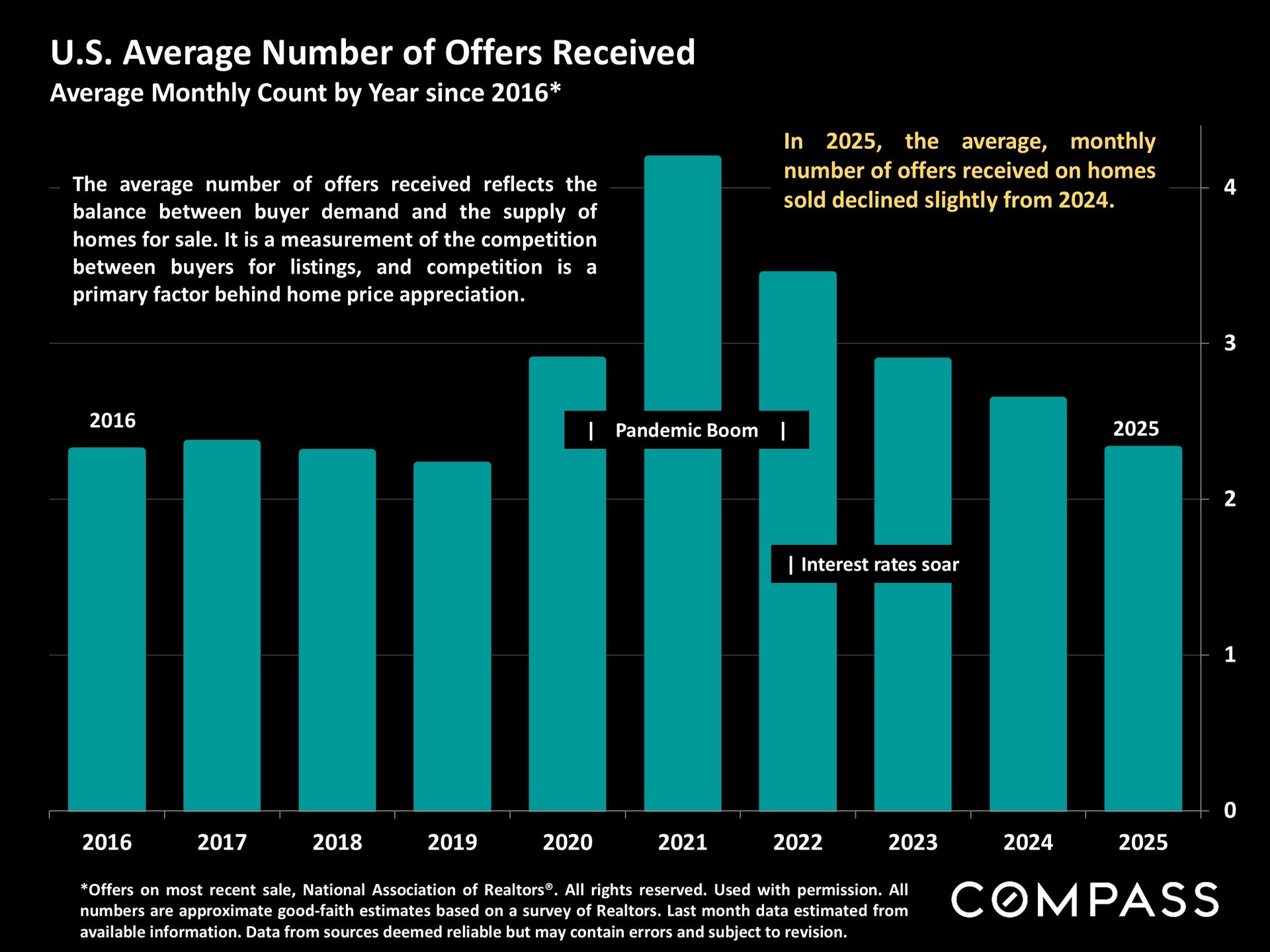
Photo Courtesy of Compass
A Strong Signal to Close Out 2025
December 2025 delivered a notable surprise: a large spike in sales compared to November, bucking typical seasonal trends. Historically, December is quieter—but this unexpected momentum is a very positive signal as we head into 2026.
Despite this late-year surge, total annual sales volume for 2025 was essentially flat compared to 2024 and remained at historically low levels. That said, expectations are building for a rebound in sales activity this year, supported by improving affordability and buyer confidence.
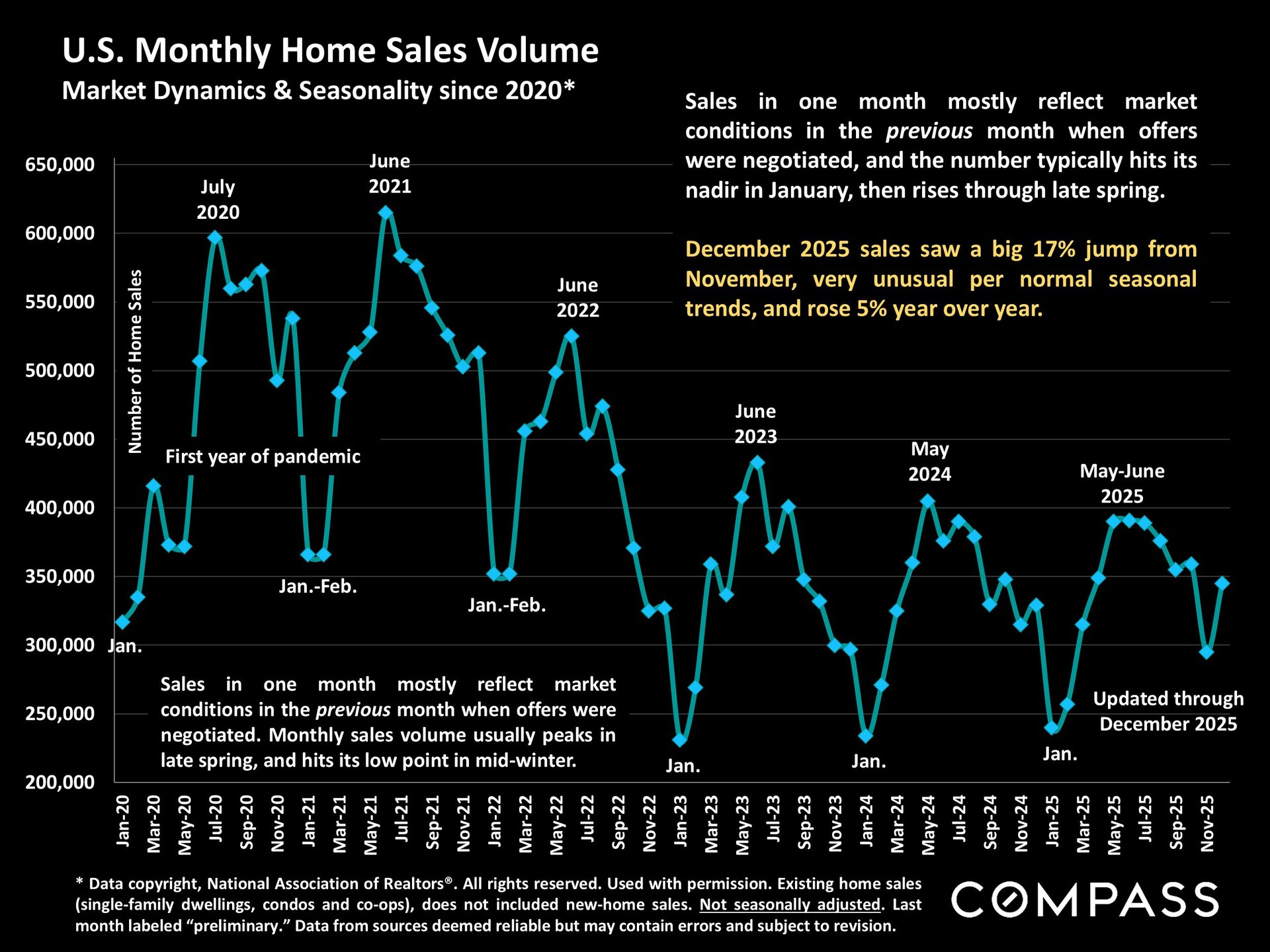
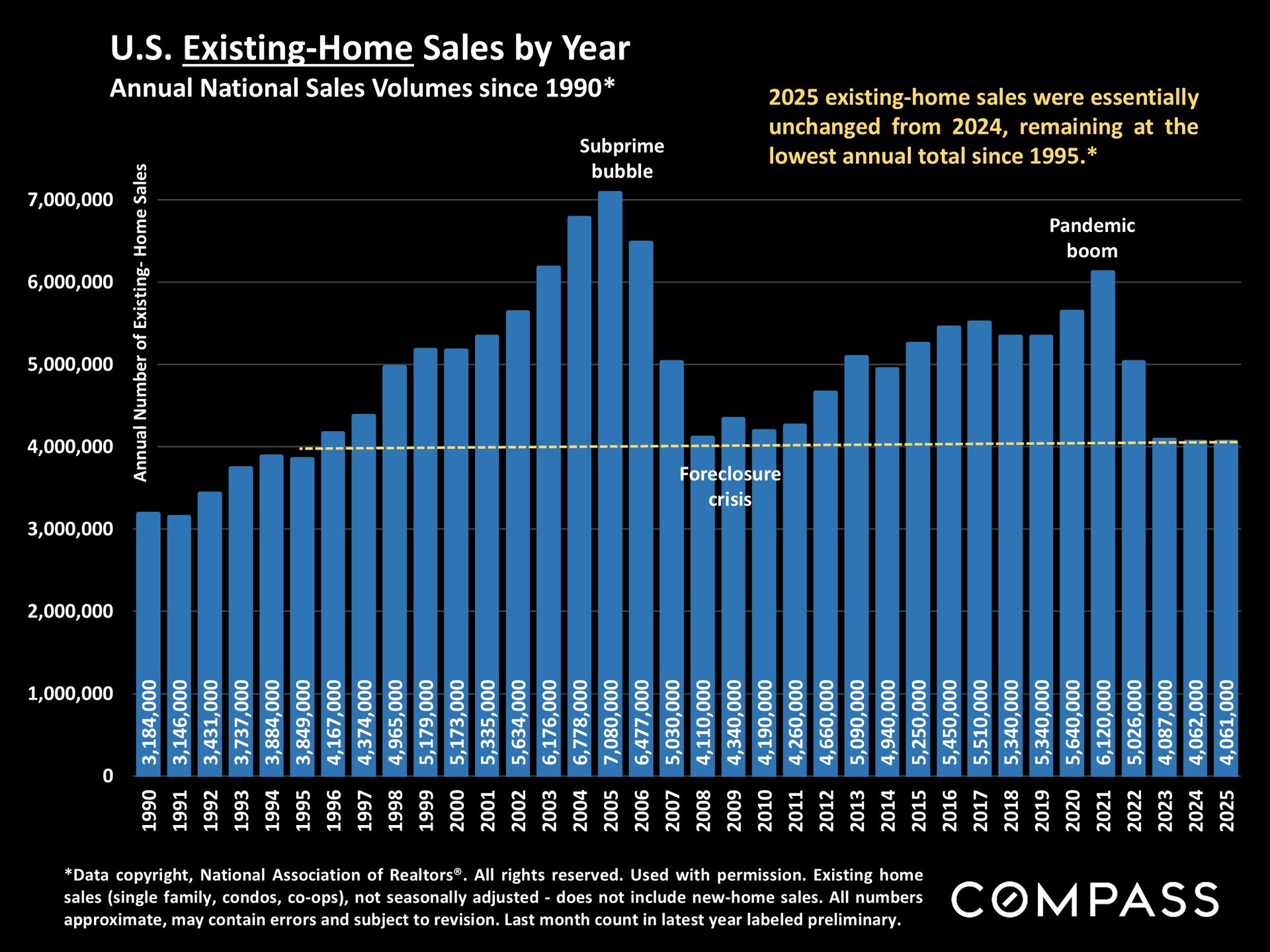
Photo Courtesy of Compass
Interest Rates and Wealth: Two Major Economic Drivers
Two economic forces dominated 2025:
-
Interest Rates
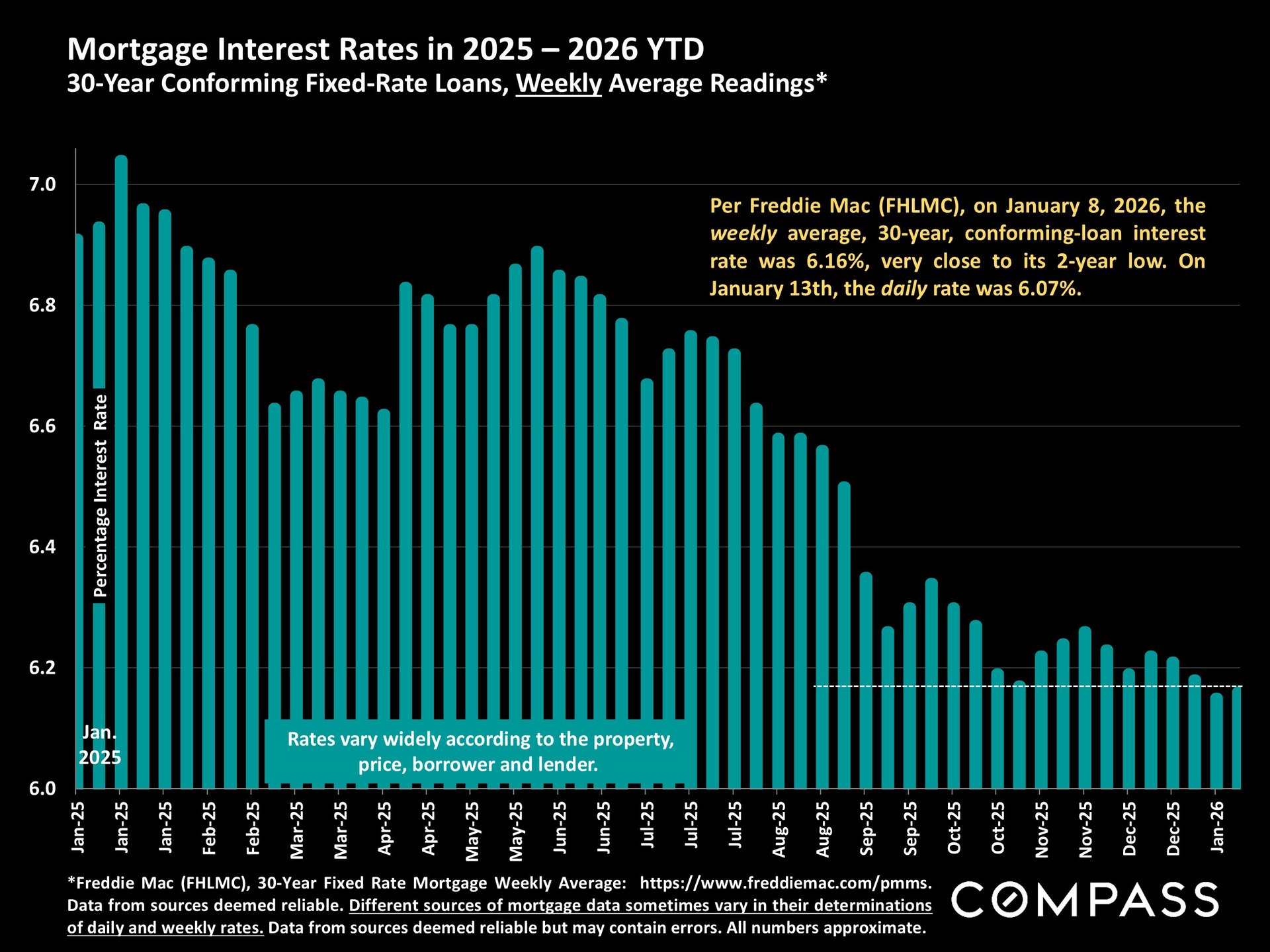
Mortgage rates fell sharply after the summer and are now near multi-year lows. This has had a meaningful impact on affordability and buyer purchasing power. -
Stock Market Performance
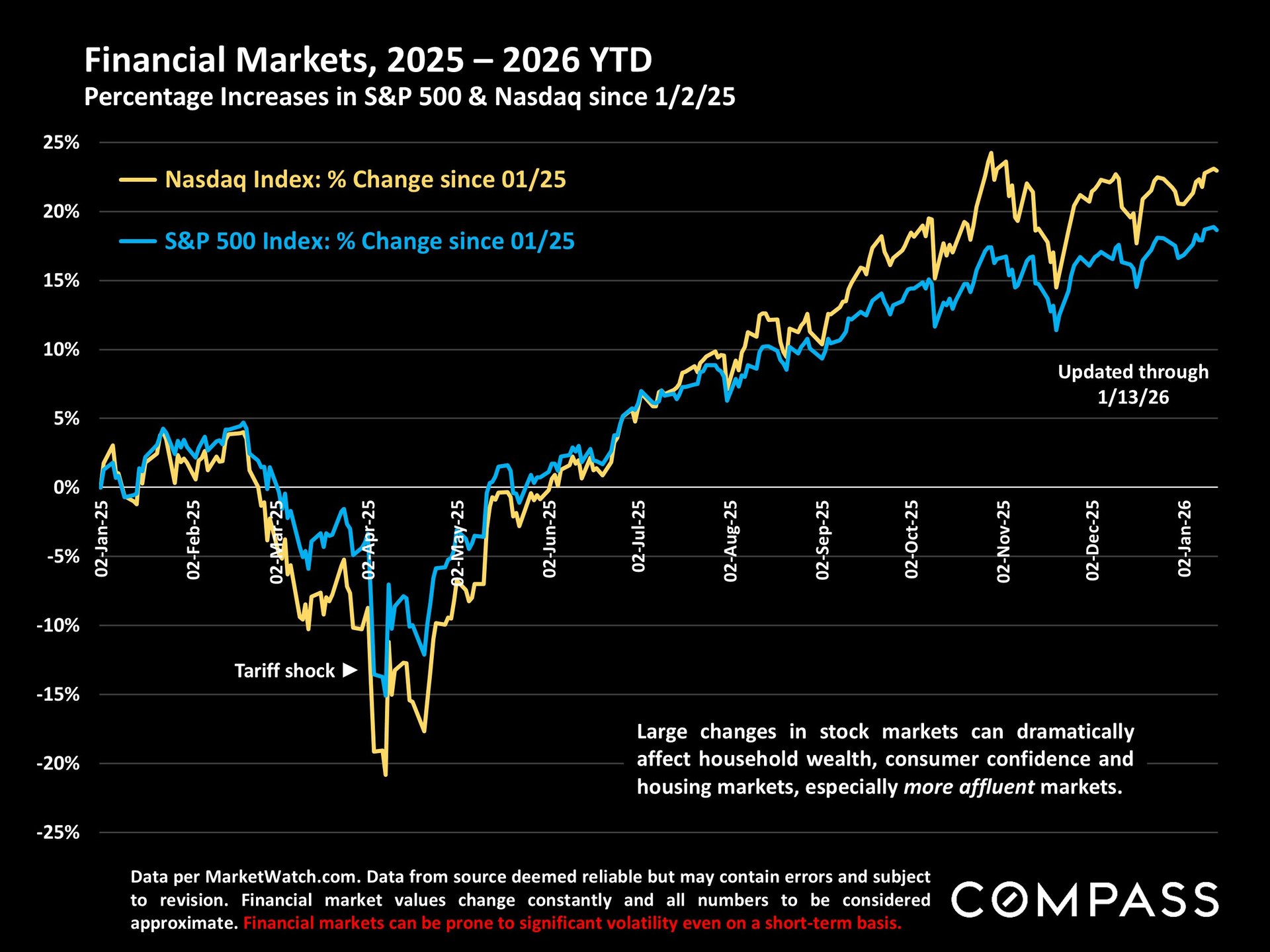
Stock markets ended the year at or near historic highs, boosting household wealth and reinforcing consumer confidence—both critical drivers of housing demand.
Together, these factors create a more supportive backdrop for real estate activity in 2026.
Photos Courtesy of Compass
Uncertainty, Inflation, and the Fed
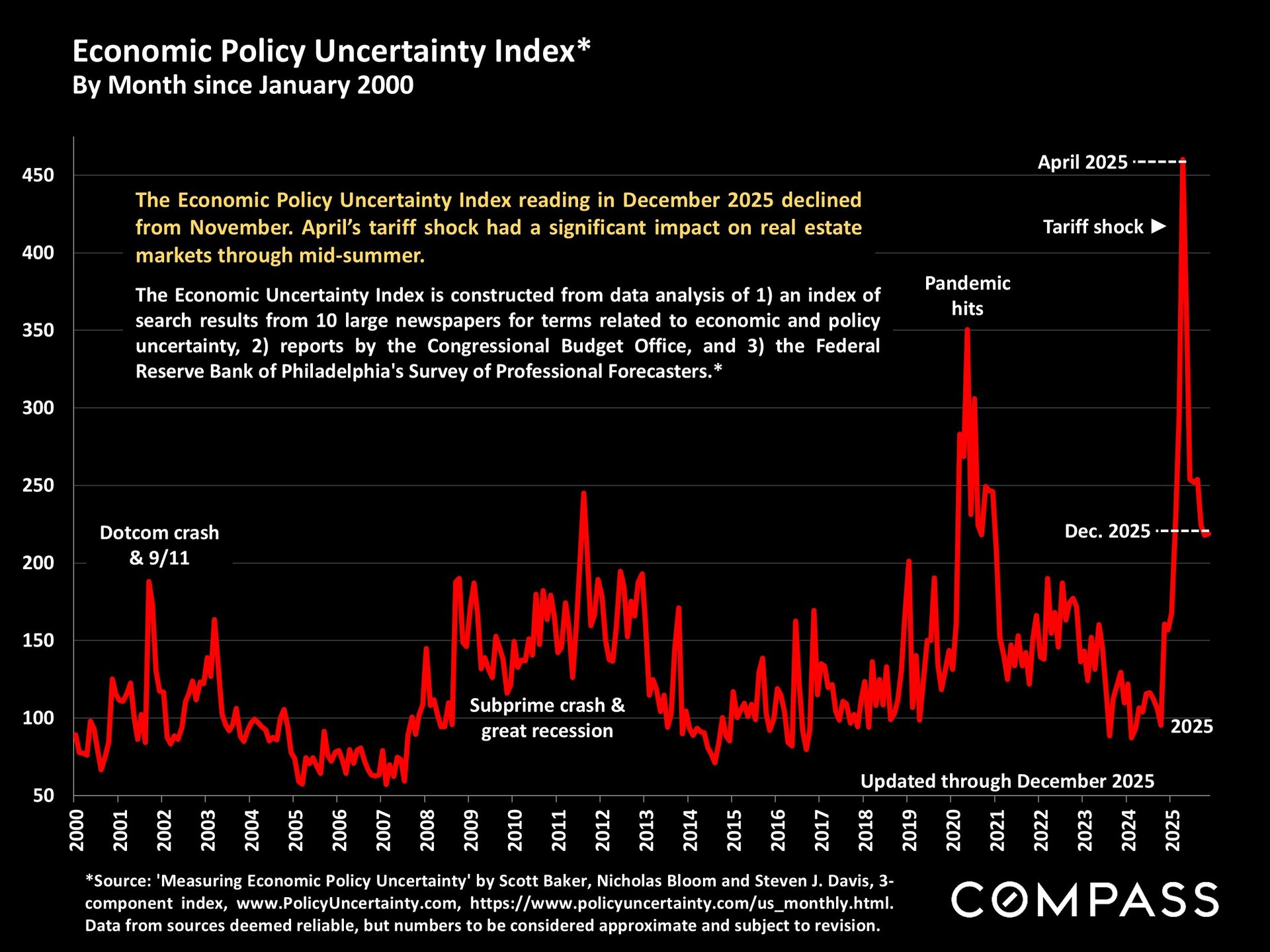
The Economic Policy Uncertainty Index highlights the political and economic volatility that erupted last spring, which significantly slowed the real estate market. This uncertainty was mirrored in stock market fluctuations and contributed to increased caution among buyers and sellers alike.
Additional pressures remain:
-
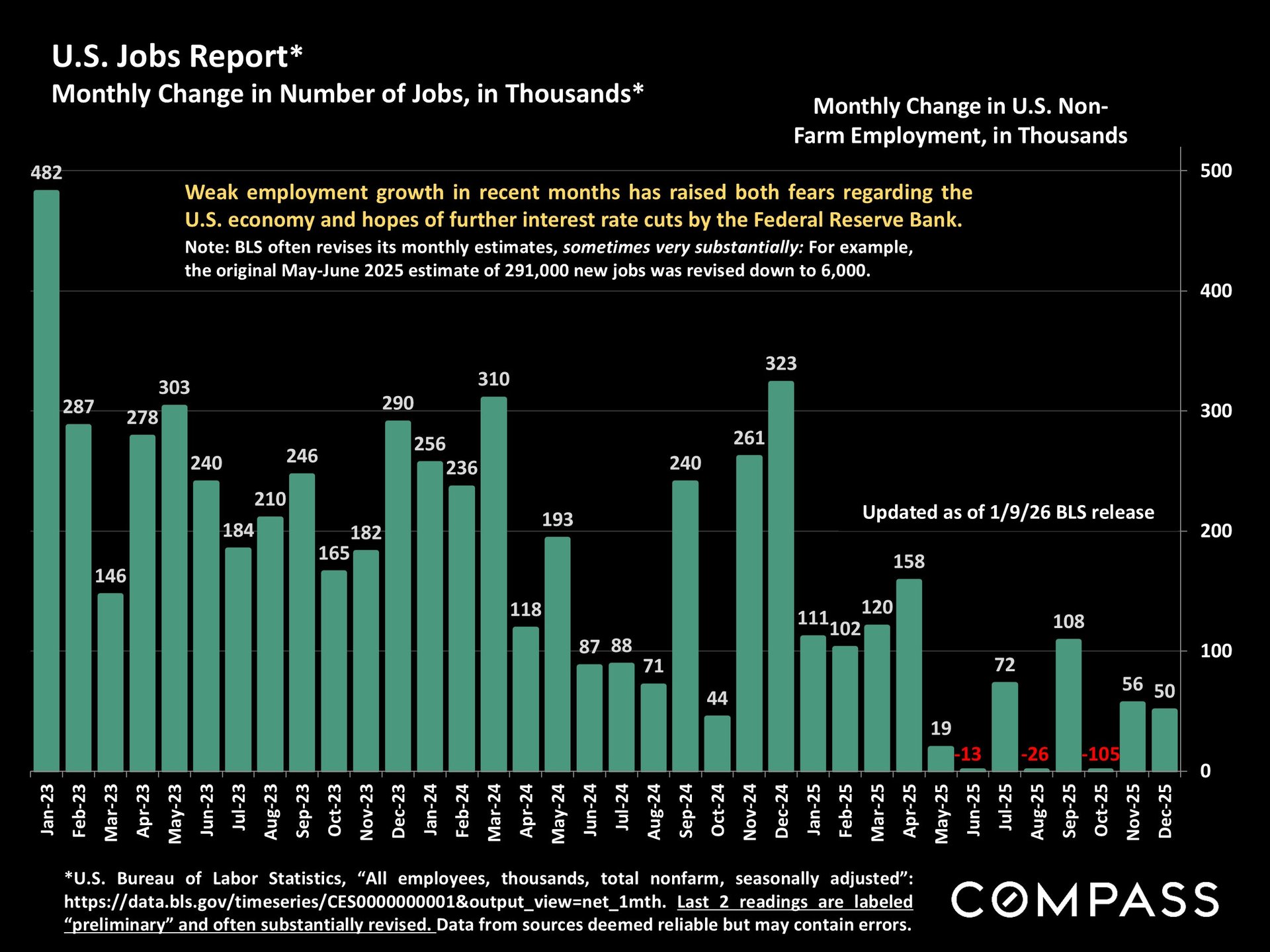
Employment and job security concerns have risen nationally
-
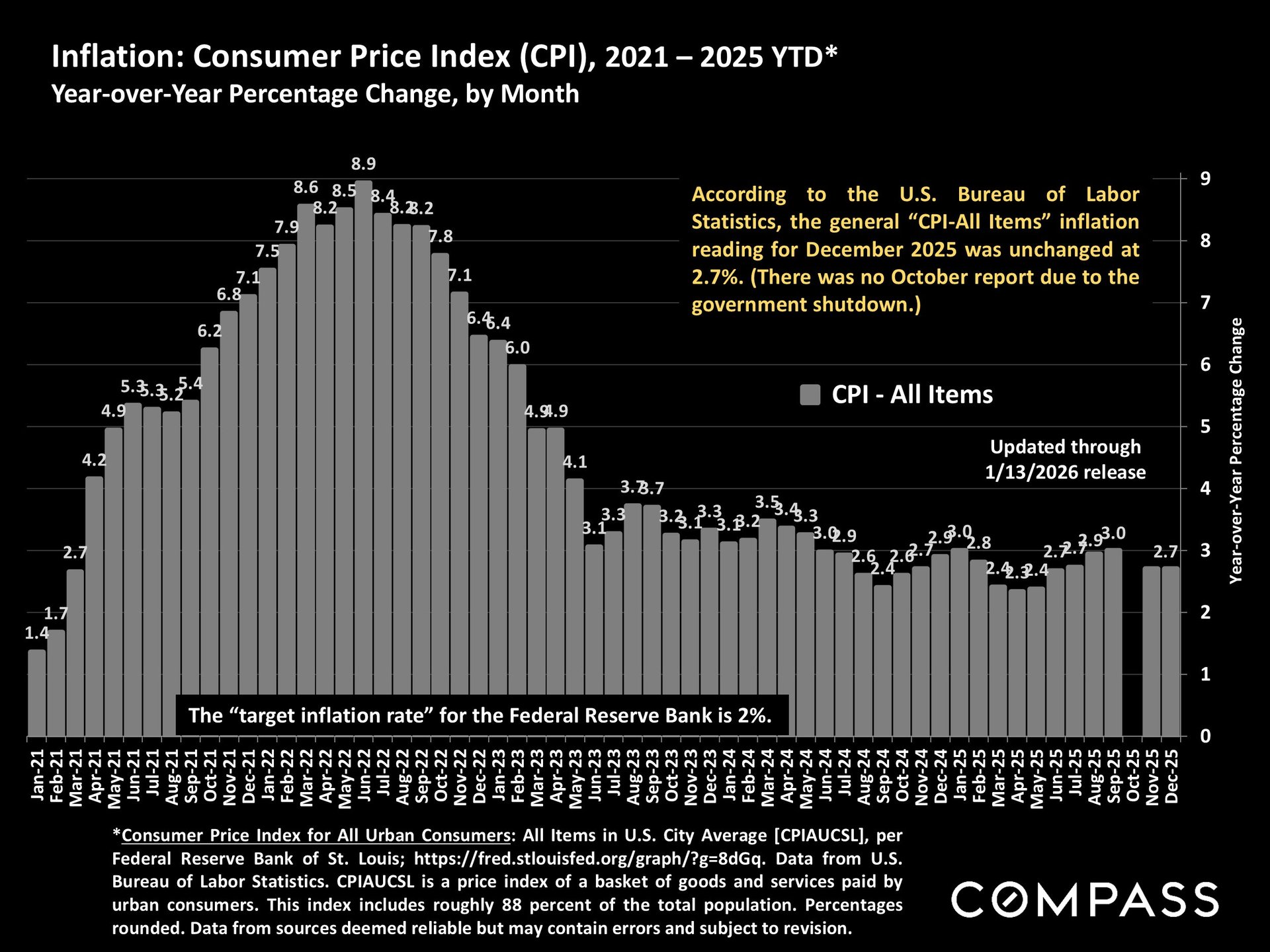
Inflation has stayed relatively subdued but stubbornly persistent
-
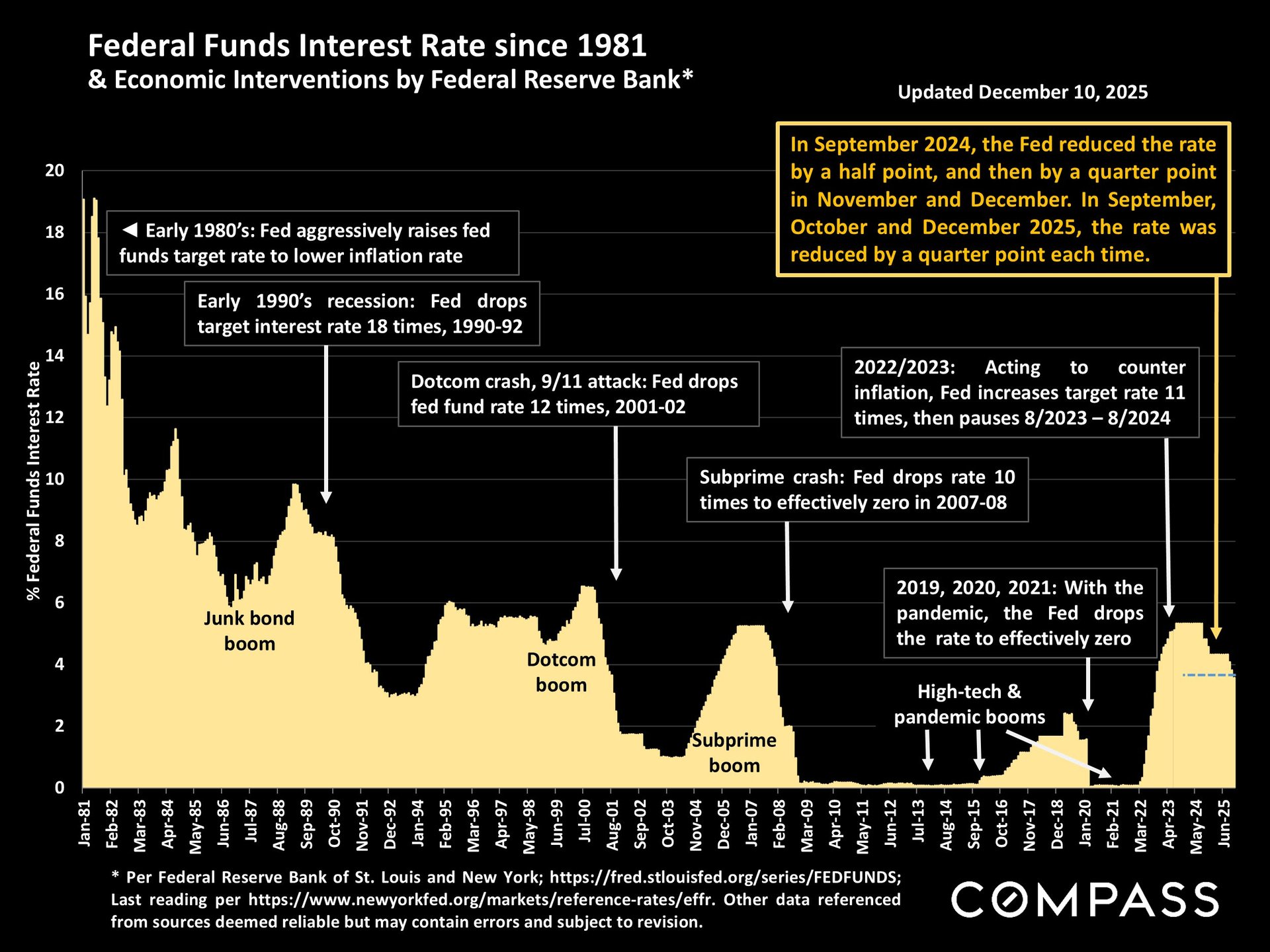
Federal Reserve policy continues to be one of the most debated and influential factors in the economy
Few institutions play a larger role in shaping housing conditions than the Federal Reserve, and its benchmark rate decisions remain front and center for consumers and markets alike.
Photos Courtesy of Compass
Insurance Costs and Climate Risk
Another growing factor in housing affordability is insurance. Natural disasters continue to push insurance costs higher across much of the country. While 2025 avoided major hurricanes, the devastating Los Angeles fires and widespread storm damage nationwide reinforced how climate-related risks are reshaping housing costs and decision-making.
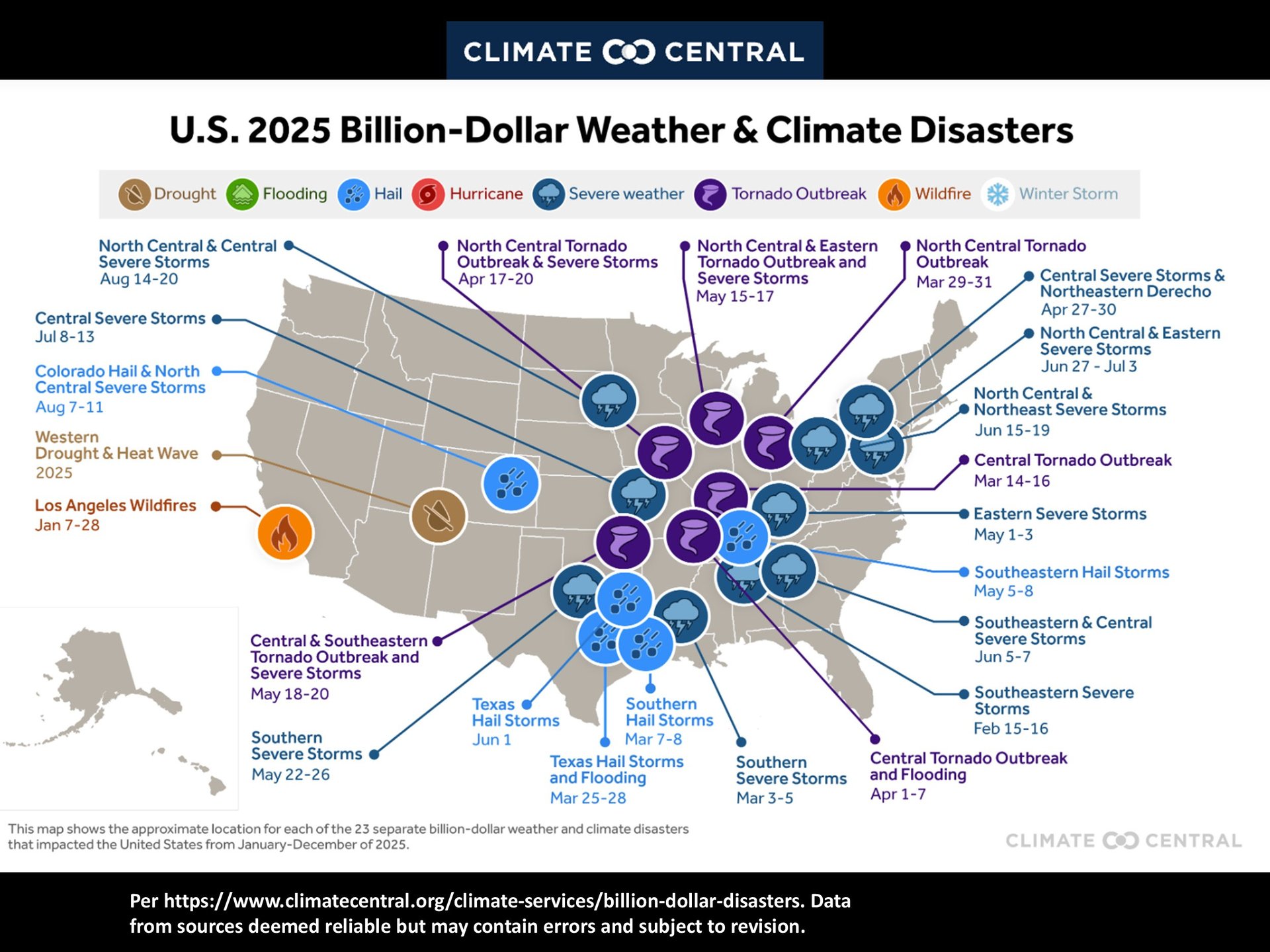
Photo Courtesy of Compass
Looking Ahead to 2026
The national real estate market enters 2026 in a more balanced, thoughtful phase. Inventory has improved, affordability is showing signs of recovery, and late-2025 momentum offers optimism for increased activity ahead. While uncertainty and rising costs remain part of the conversation, the foundation for a healthier market is steadily taking shape.
For buyers and sellers alike, informed strategy and expert guidance will be more important than ever in the year ahead.
Ready to Make Sense of What This Means for You?
Whether you’re considering buying, selling, or simply want to understand how these national trends translate to your local market, having the right guidance matters. The Blackshaw Messel Group is here to help you navigate today’s evolving real estate landscape with clarity, strategy, and confidence.
If you’d like a personalized market analysis, insight into current opportunities, or help planning your next move for 2026, reach out to The Blackshaw Messel Group today!

Photo Courtesy of Something Blue Photography