The housing market experienced one of its most significant shifts of the year in September, as rising bond yields pushed mortgage rates higher and began to put renewed pressure on housing demand. According to the latest Compass National Insights Report, mortgage rates climbed to approximately 7.25%, their highest level in 28 months, while the 10-year Treasury yield rose above 5.1%, its highest point since 2007.
Higher Rates Are Reshaping Buyer Demand
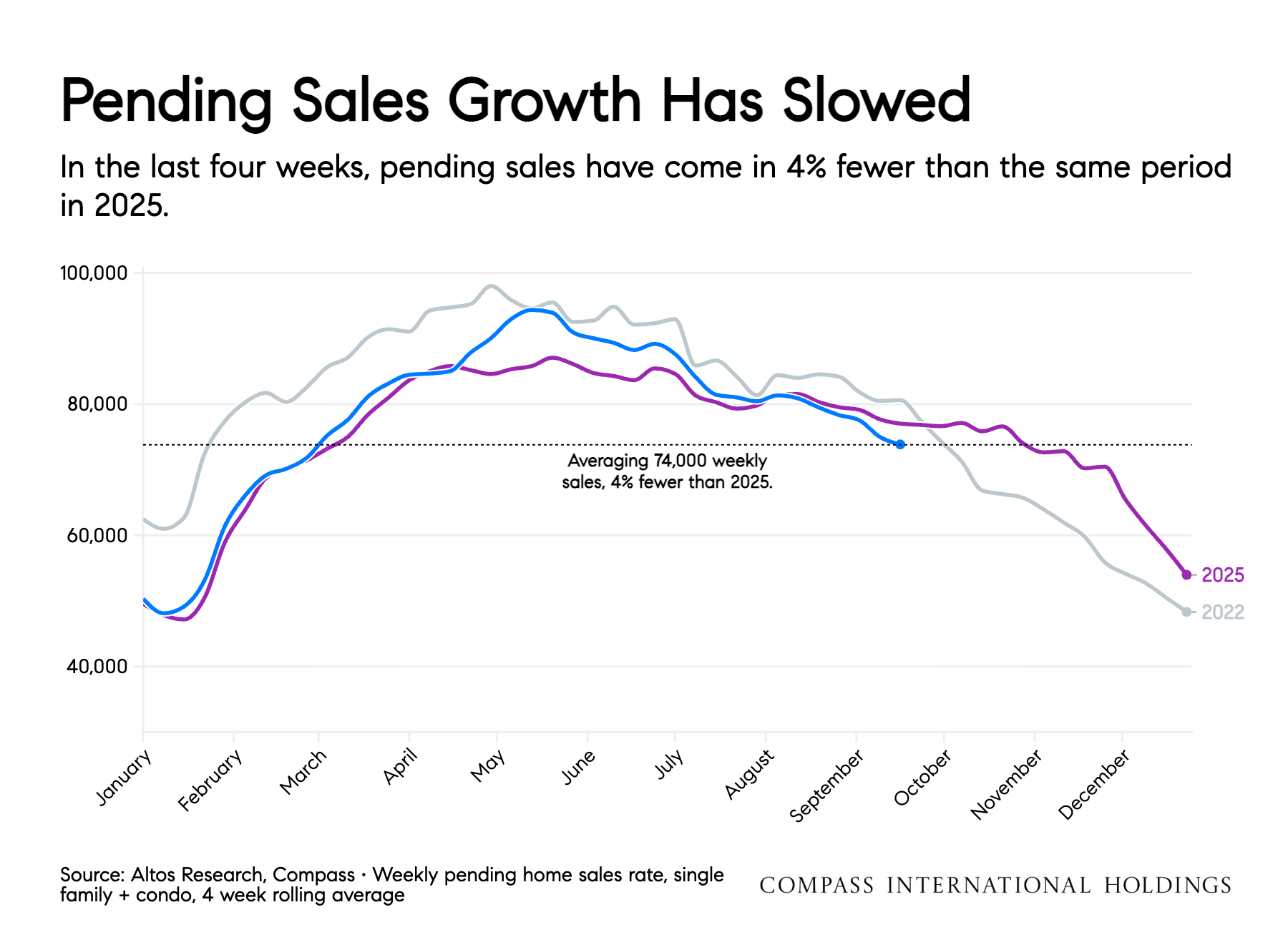
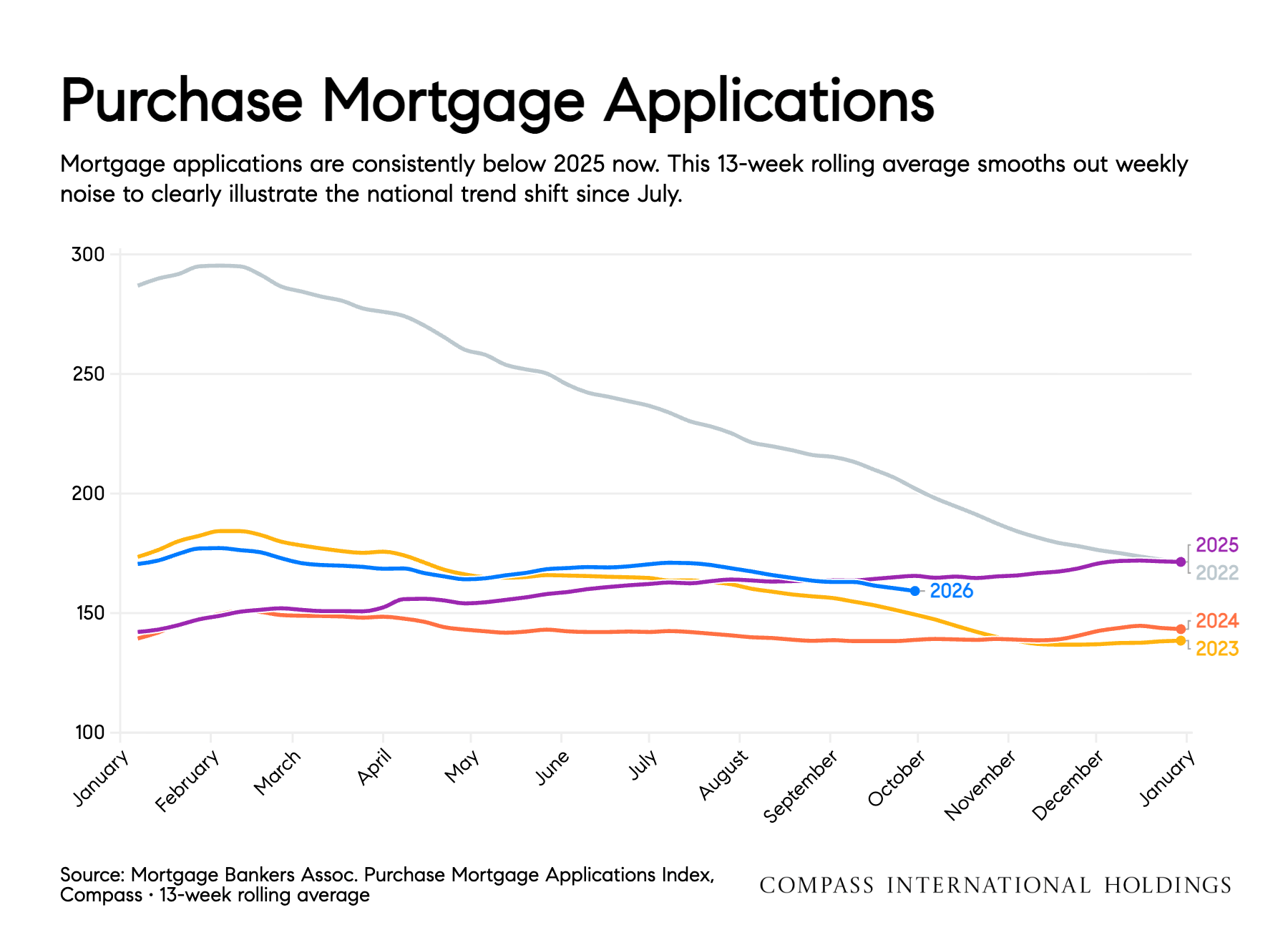
The increase in mortgage rates is beginning to affect home-shopping activity across the country. Pending home sales over the most recent four weeks were approximately 4% below the same period last year, while mortgage purchase applications and other indicators of buyer intent also declined as rates increased.
Photos Courtesy of Compass
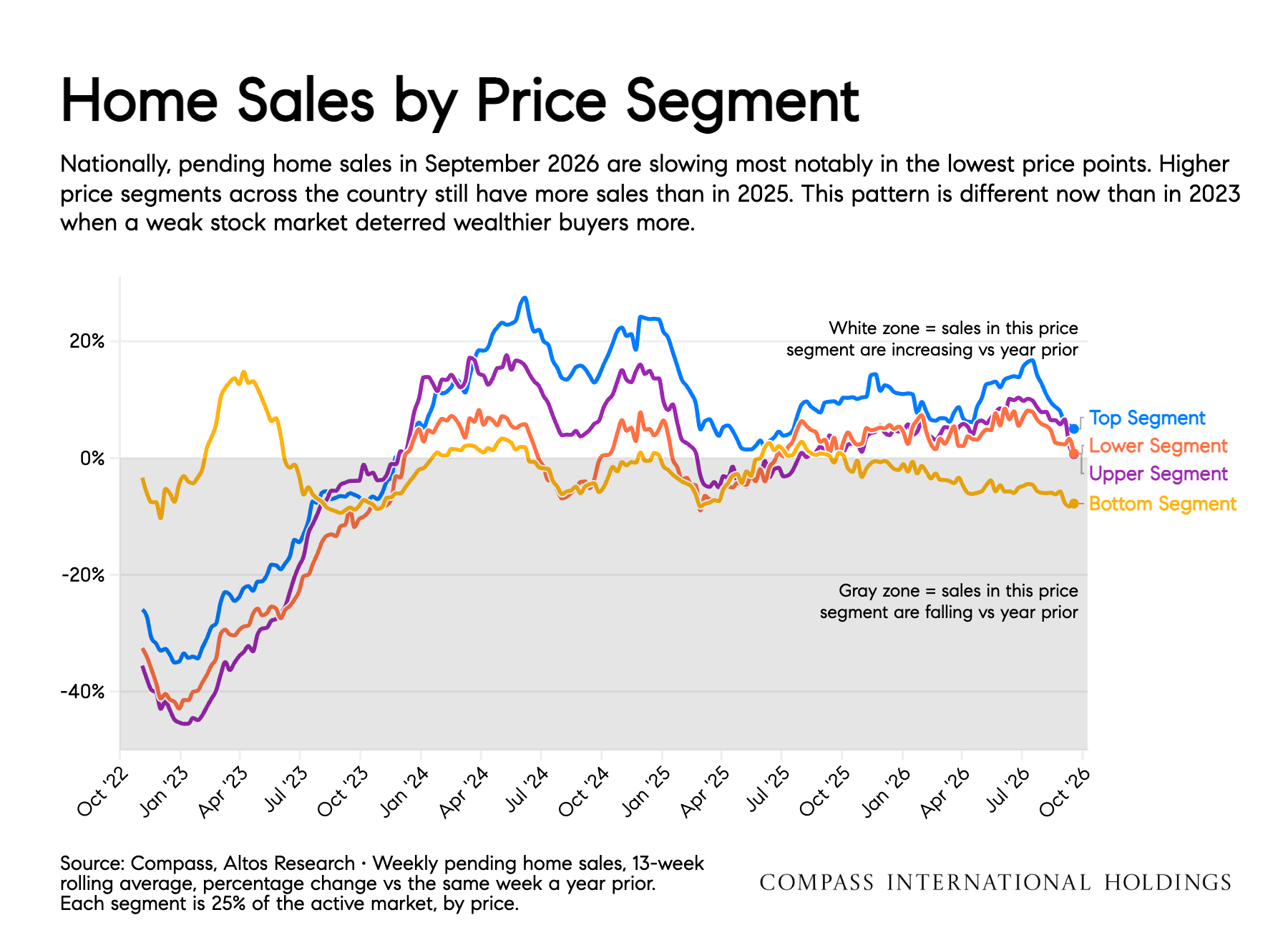
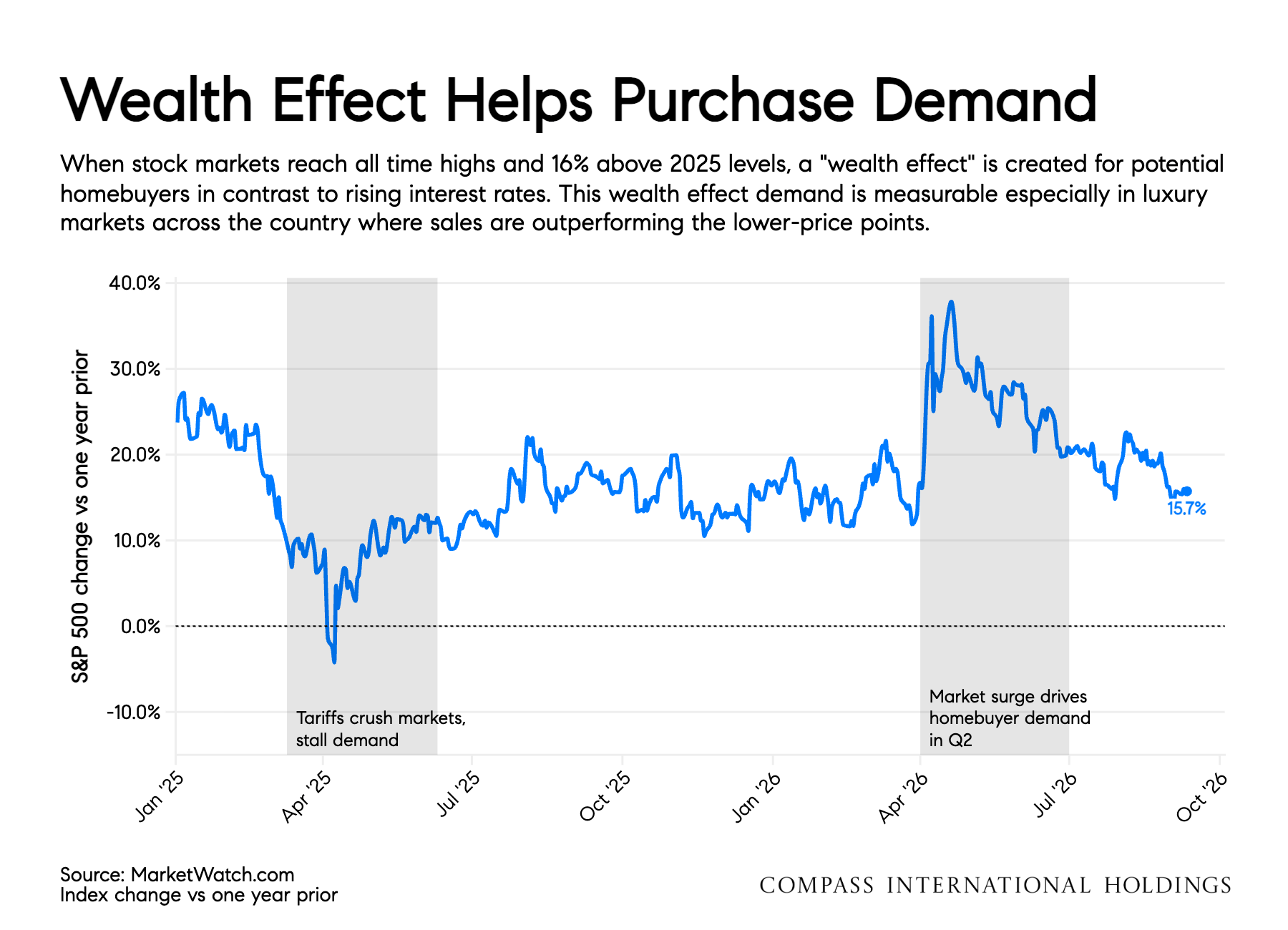
The impact, however, has not been evenly distributed across the market. Compass reports that the greatest weakness is occurring at lower price points, while the luxury segment continues to outperform 2025 levels. A strong stock market, with the S&P 500 up nearly 16% from a year earlier, has contributed to continued strength among higher-end buyers.
Photos Courtesy of Compass
Inventory Is Continuing to Improve
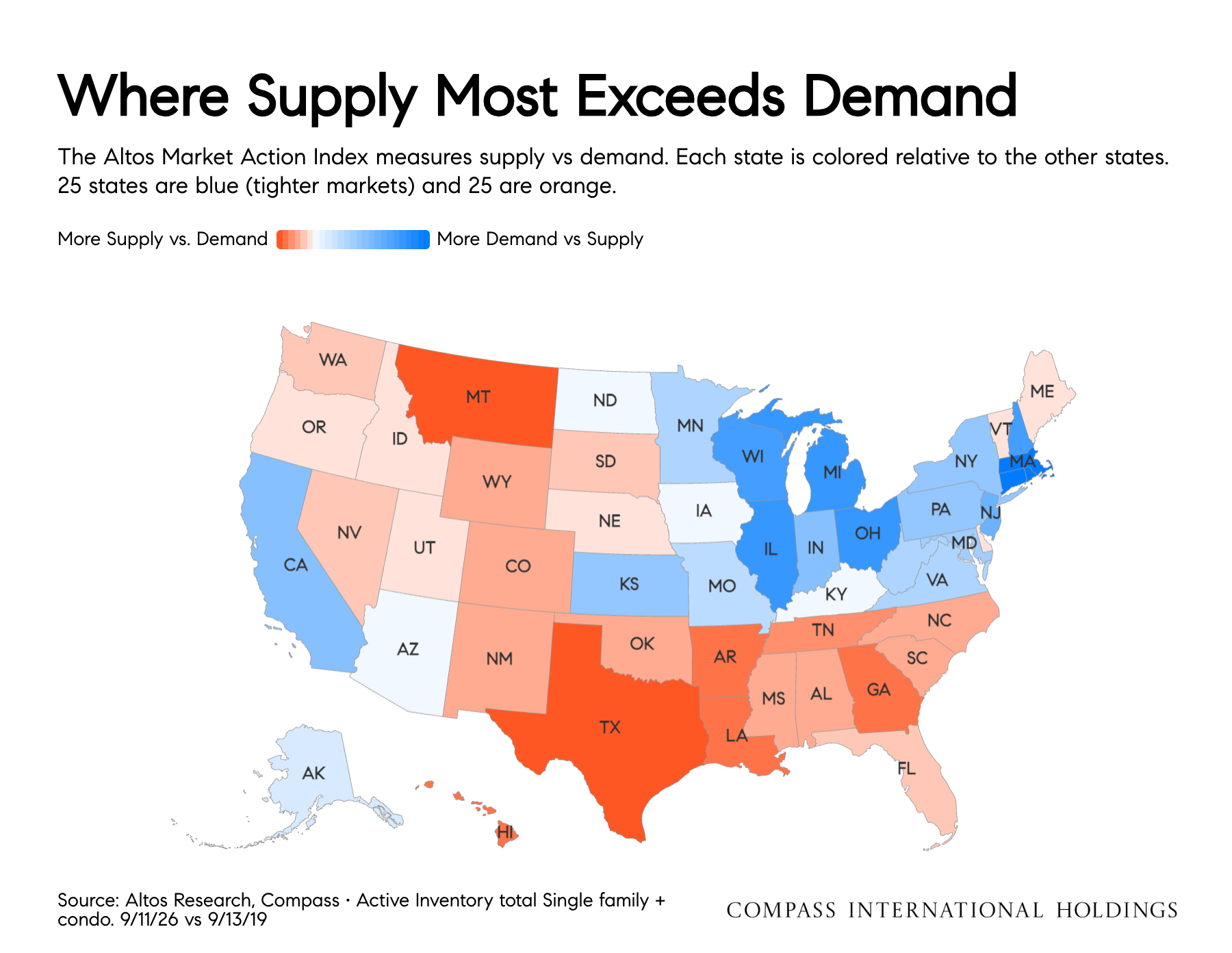
For buyers, there is some encouraging news: inventory is growing again.
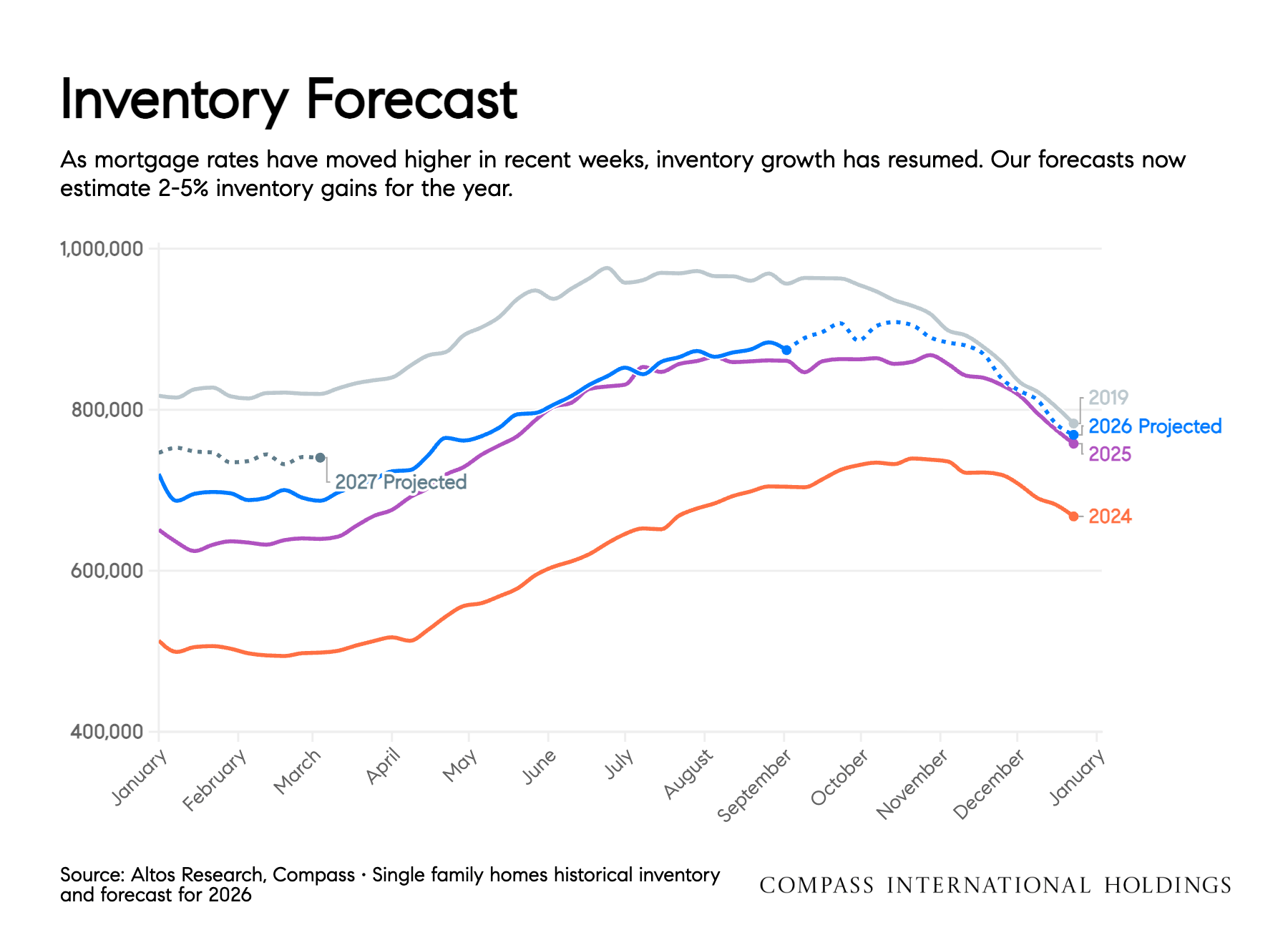
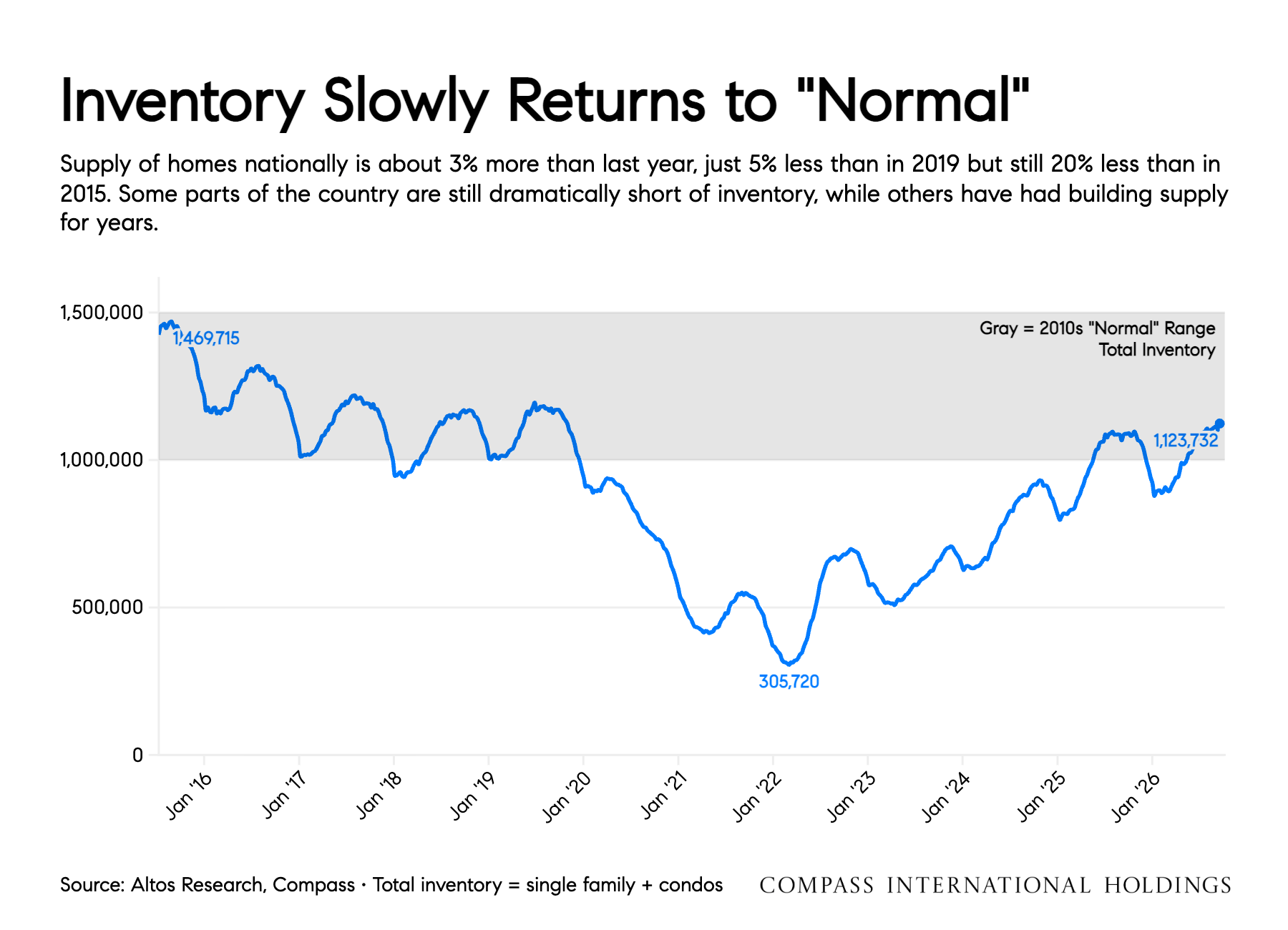
Compass expects national inventory to increase by approximately 2–5% this year, with overall supply now just 5% below 2019 levels. That said, housing conditions continue to vary significantly from one state and market to another.
More inventory can provide buyers with additional choices and potentially more negotiating opportunities, particularly in markets where new listings are increasing faster than buyer demand.
Photos Courtesy of Compass
Home Prices Remain Relatively Stable
Despite changes in interest rates and demand, home prices have remained relatively resilient. National home prices are currently 1.5% higher than a year ago, while median list prices have remained within a relatively narrow range for approximately four years.
For homeowners considering selling, this stability reinforces the importance of understanding local market conditions rather than relying solely on national headlines. Pricing, inventory, buyer demand and the condition of individual properties can vary considerably from one community to the next.
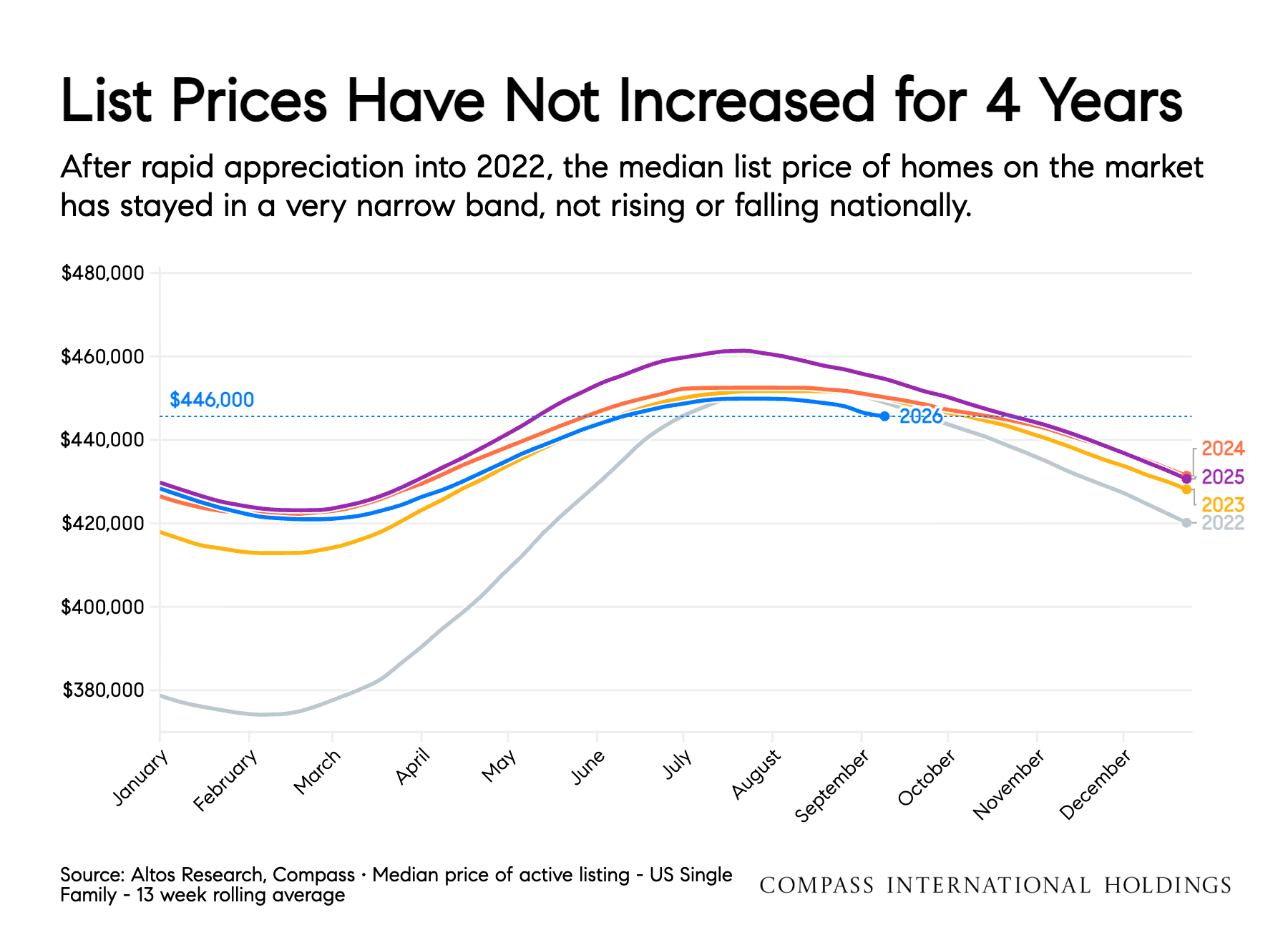
Photo Courtesy of Compass
This Is Not a Distressed Housing Market
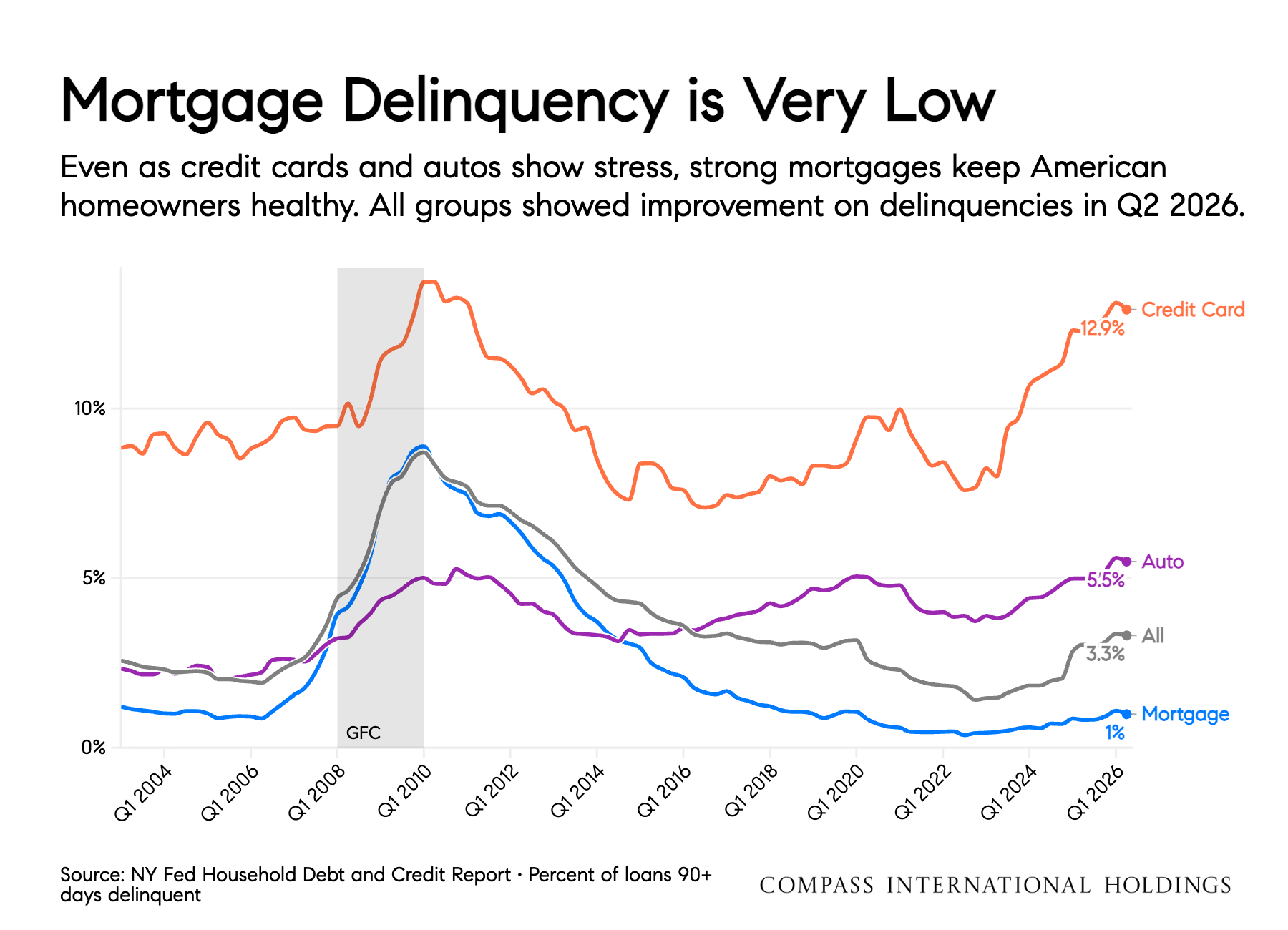
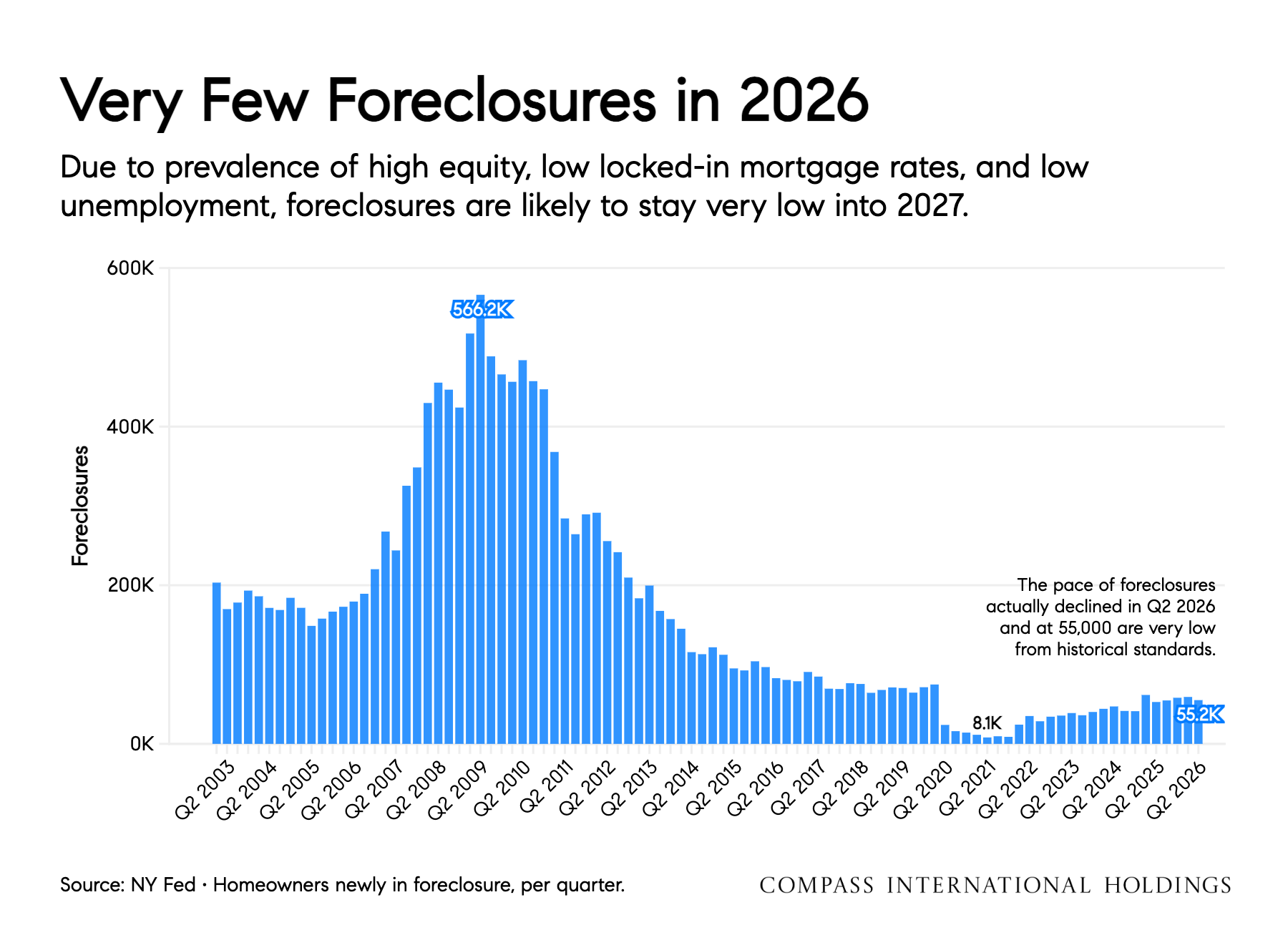
One of the most important takeaways from September's report is that the current market should not be confused with a distressed housing environment.
Mortgage delinquencies remain near 1%, and foreclosure activity remains very low compared with historical standards.
While higher rates are creating challenges for some buyers, the broader housing market continues to show stability in several important areas.
Photos Courtesy of Compass
What This Means for Buyers and Sellers
For buyers, today's market may require a more thoughtful approach to affordability. Higher mortgage rates can significantly affect monthly payments, making it especially important to understand your budget, financing options and the trade-offs between price and interest rate.
At the same time, increasing inventory may give buyers more opportunities to find a home that fits their needs without facing the same level of competition seen in tighter markets.
For sellers, the changing market makes pricing and preparation particularly important. Buyers have more choices in many areas, so homes that are appropriately priced, well-presented and strategically marketed may have an advantage in attracting attention.

Photo Courtesy of Something Blue Photogrpahy
Looking Beyond the Headlines
Whether you're considering a move now or simply wondering what your home could be worth in today's market, we're happy to help you understand what's happening in your specific area.
The Blackshaw Messel Group is here to provide local expertise, thoughtful guidance and the market information you need to make informed real estate decisions.
Want a personalized look at your neighborhood? Contact us for a complimentary market analysis or to discuss your buying or selling plans.